










Lucy Clifford speaks to Social Care Today about facing the villains of her childhood and why silence allows abuse to remain hidden in plain sight.
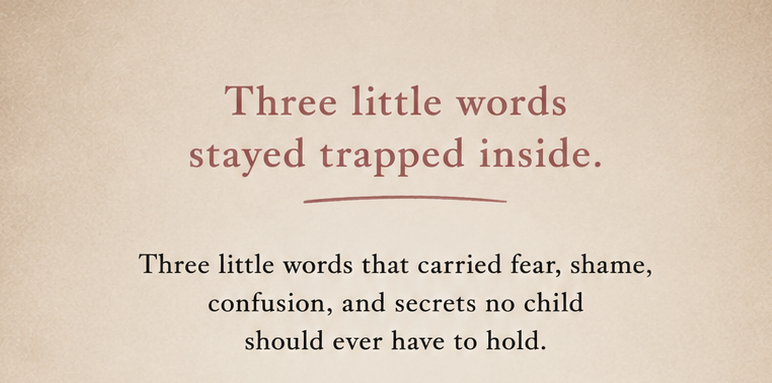
Image: the back cover of Lucy’s book
October is the month when we willingly seek out scares – from horror films and at scare fests filled with clowns and chainsaw-wielding zombies. Once we’re into November, the memory of them starts to fade but, as the statistics surrounding child abuse show, the real monsters don’t disappear when the decorations come down.
Around one in 20 children in the UK are estimated to experience sexual abuse, but the true figure is unknown because so much goes unreported.
We see horrific cases in the headlines. We gasp, we call them tragic and we move on. But these things don’t stop happening because we stop talking about them. We should lean into the conversations that make us uncomfortable because that’s where the important conversations are.
In her (newly published) memoir, Three Little Words, Lucy Clifford describes the abuse she suffered as a child and how she finally found the courage to start that conversation.
‘I think we often talk about the person that was abused but actually it ripples so much further than that,’ Lucy says. ‘It can affect families, friends, classmates, colleagues, even people in your town you’ve barley spoken to. But even when people know what’s happened, they usually don’t know what to say, so they just stay silent.’
Why did you decided to title your book ‘Three Little Words’?
As a child, when I disclosed what was happening, I wasn’t able to say it vocally. Although I could speak, I didn’t feel able to say the words out loud.
So, I wrote three little words on a piece of paper, which were ‘Dad abuses me’, and pushed it under my mums bedroom door. That inspired the name of my book.
That’s incredibly chilling. After you slipped the note under the door, how did you mum react?
My mum acknowledged it, but tried to deal with it behind closed doors and make my dad apologise. But it rippled, and other people found out, including the police and social care.
At the time, my dad was still allowed supervised contact at home, so I was exposed to a lot of my perpetrator being around me. He was convicted on two counts, but he got a two-year suspended sentence. That has been revisited since then, but unfortunately, because of when the offence took place, it would still have been before the Sexual Offences Act Changed.
Part of my journey was wanting to name the person publicly, because the police have said I can, given the conviction. But that doesn’t sit with the message I want to send. I think that makes it about them, rather than about the abuse.
What first prompted you to write the book?
When I was doing my GCSEs, we had to write a short story, and this is the only thing that came to my head. In retrospect, it was probably my first example of journaling. After this, I didn’t write about it again for another 20 years.
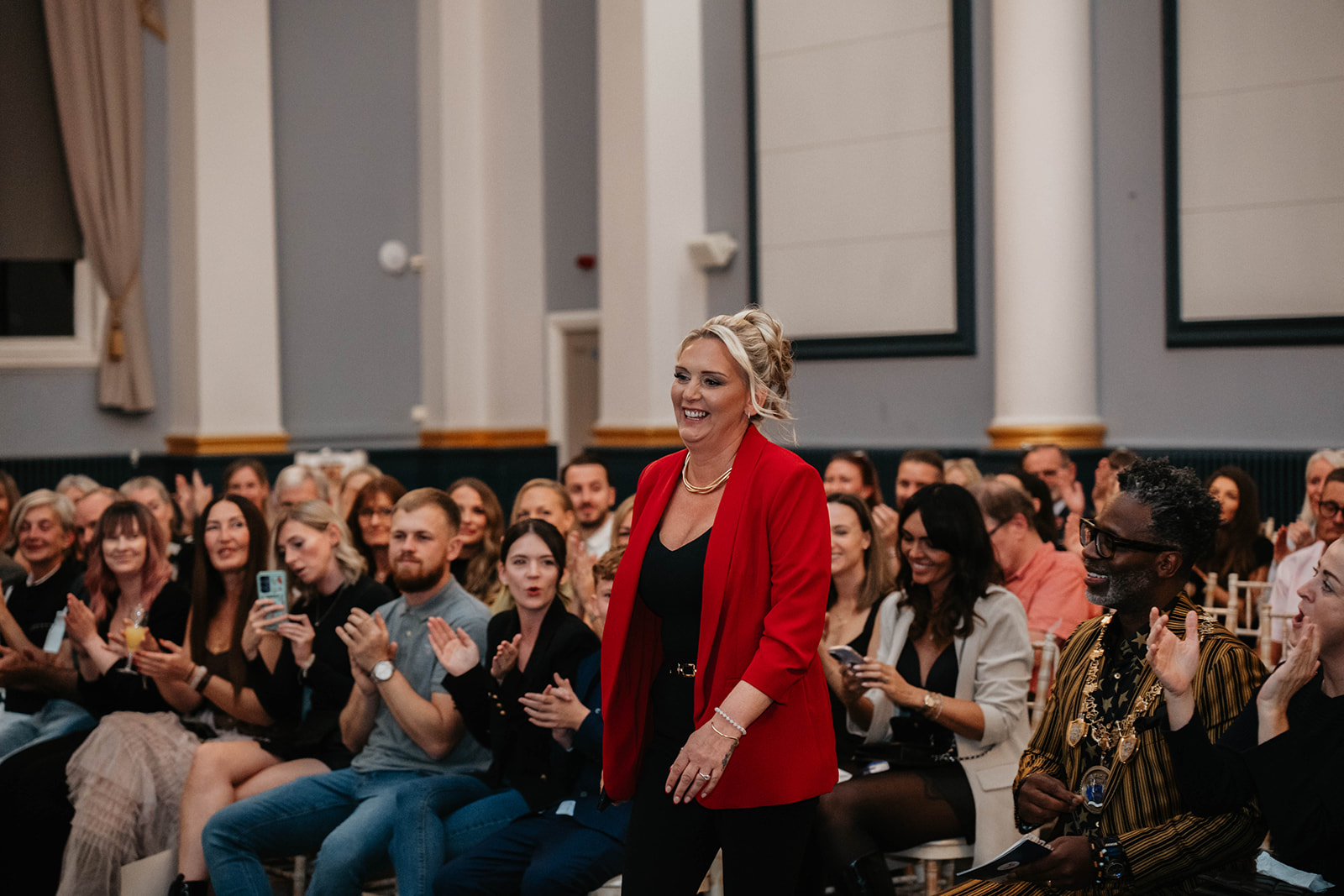
Image: Lucy attending the launch for Three Little Words
It happened on a flight to Rome. My partner and I got into an argument in the car park, and it made me think about energy and power, and how easily we can give those things up, or how people can have power over us. I just started writing notes in a very angry mood on the plane and it went from there.
I love how raw you are about your experience of trauma in the book, while also weaving in humour. Did you always know you wanted to tell it that way?
My first draft was actually quite serious, but because it’s such a deep subject, I thought it was important to realise how much light is around, without just focusing on the bad parts and them all merging into one.
I like to think I’m quite a funny person – I do loads of crazy things on social media – but I also think it’s important for people to see healing isn’t linear. You can be really happy, joke and laugh while going through something really traumatic.
You worked in children’s social care for 18 years, did your experiences influence you to help others?
Yes, I really wanted to help young people who had been through something similar to me. I came across a job in a children’s home and decided to apply, which is where it all developed. I started noticing patterns of behaviour in the children that reminded me of myself, things I’d experienced but didn’t have the words to express. It became my passion, and I eventually trained as a therapist so I could give them the tools to support themselves.
There was quite a shift when I realised how much can be said without words. Before a girl disclosed something to me, she just looked me in the eyes and said, ‘I know you know’. I’d never said anything, and I was just trying to maintain my calm, but that was a real defining moment in my career.
I think I have become the adult that I needed.
When you say you’ve become the adult you needed, what does that mean to you?
For me, it’s about facing why I never felt good enough and why I felt like I was damaged. Although it was really tough for me to go there, I never would have realised that without my experiences I wouldn’t be where I am today. In a really weird way, I’m grateful for what happened.
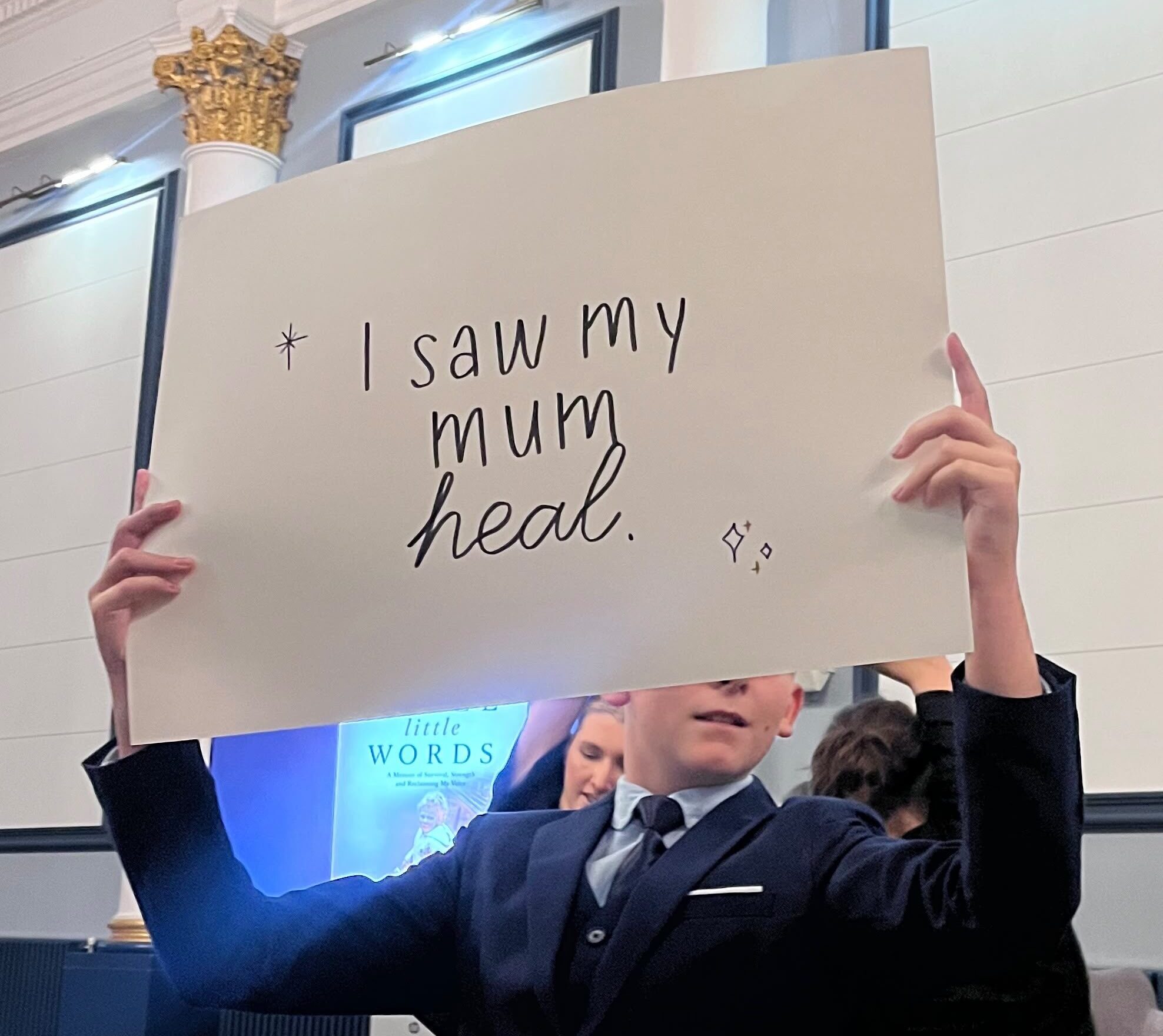
Image: Lucy’s child attending her book launch
I think I’ve lost count of the amount of times people have said to me, “Oh, so you work with naughty Kids?”, and I have to explain I work with children who have been traumatised at the hands of adults. But I wouldn’t understand that if I hadn’t of experienced it myself.
When you were going through everything, was there anything that gave you a bit of an escape?
I used to throw myself into music. When I was younger, I’d sit in my bedroom and listen to the Top 40. I loved finding out which song would come out at number one. I’d even try and learn the chorus as it played, so I could sing along by the next time it came on.
My friends and my friends’ parents also made such an impact on me. Two in particular, Christine and Ted, used to let me come and stay over, and Ted would laugh and joke with us. They lived above a pub, so sometimes they’d let me pour a lime and lemonade which felt like such a big deal. I loved being there, it was like I could just be Lucy.
I noticed on social media you go by Lucy Sparkles, where did this name come from?
It came from a charity trip to Kenya, there was two Lucy’s and someone called me Sparkles and it’s just stuck. Even now people don’t tend to call me Lucy they’ll shout “Alright Sparkles!”
Changing my name represents letting go of the old and moving on – it represents all things light and sparkly. I haven’t changed my name officially, there’s a bit of a debate about whether marriage will do that, but Sparkles means something more to me.
When I spoke with Lucy, she was sitting against a purple background, decorated with a big, shiny silver mirror. It was lovely and bright, a perfect fit for someone who wants, and successfully manages, to make the world a better place.
Images: Josh Parrick Photography
Other interviews:
‘They need politicians to advocate for them’: Will Quince on the Babies Bill
‘Disabled people are being regarded as an expensive luxury’: Mik Scarlet on disability rights
Leave a Reply