







Leading disability campaigner and TV presenter Mik Scarlet reflects on decades of activism, inaccessible healthcare and changing attitudes towards disabled people, warning a new generation may soon be ready to fight back.
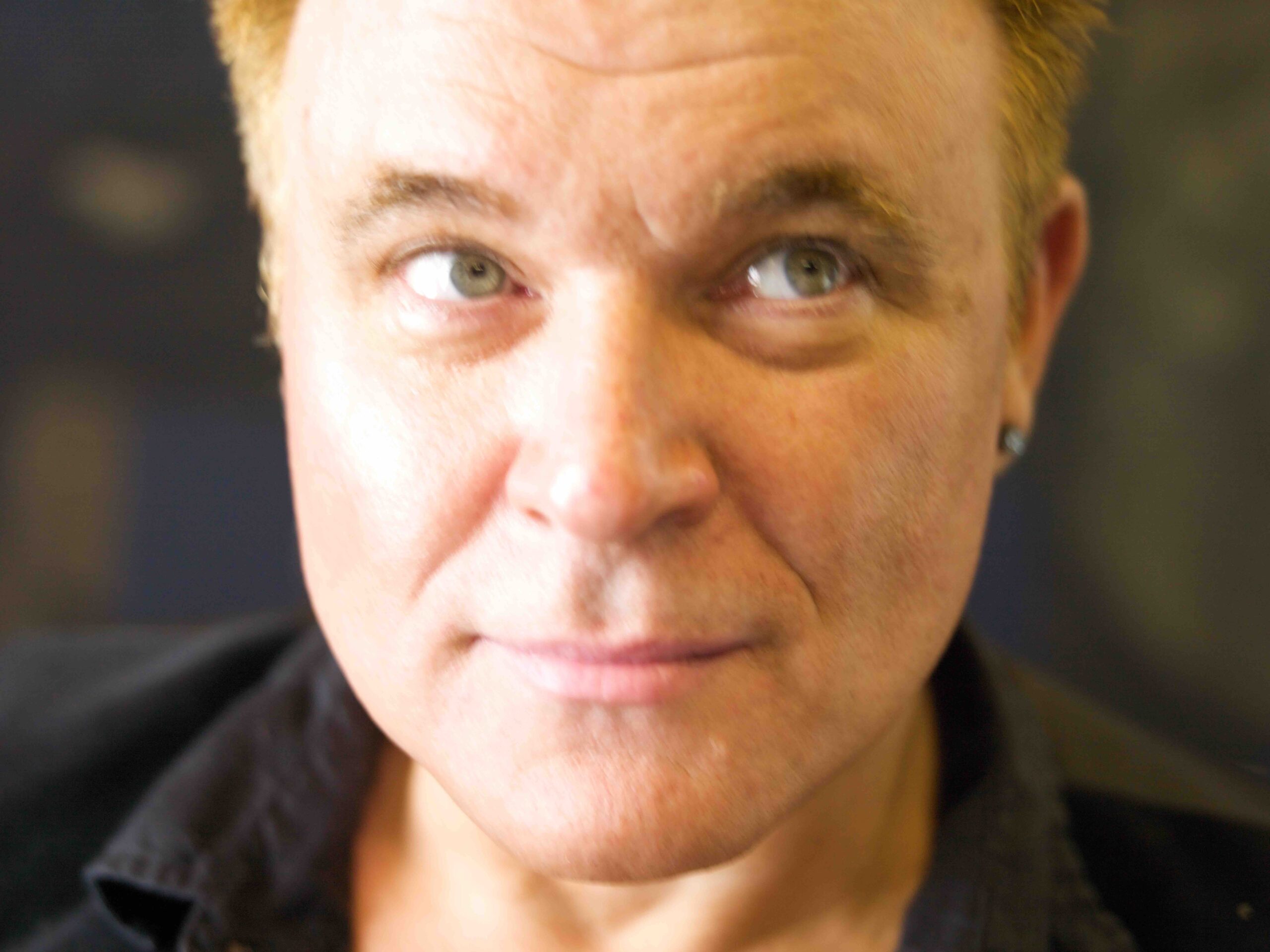
Image: Mik Scarlett
In June 2026 we reported on the launch of the National Disability Movement Archive & Collection (NDMAC.ORG), which preserves the history of disability rights and activism in the UK.
Mik Scarlet, who’s been named one of the UK’s most influential disabled people, features in the collection. At just six weeks old he was diagnosed with adrenal neuroblastoma, the treatment for which left him with a paralysed right leg.
Despite growing up disabled, Mik says his parents brought him up to be ‘confident and proud’, qualities that absolutely came across during our interview. He spoke to us about his career in television, his involvement in discussions that helped shape the Disability Discrimination Act and how attitudes towards disabled people have changed over the years (spoiler alert: it’s not for the better)…
You’ve spoken about the importance of accessibility throughout your campaigning work. I’d be interested to know how accessible you think healthcare is for disabled people?
It’s something I’m always confused by, because hospitals are for the sick, but they seem to be designed for the healthy.
It amazes me that some hospitals don’t have accessible changing place toilets. University College Hospital in London didn’t have any when it was built, so you would’ve needed to go into the toilet to change into hospital wear and the only place to sit is on the loo because there isn’t any accessible seating.
In some cases I’ve been in hospitals without accessible toilets, you have to wheel down a corridor or leave the place altogether to use a bathroom. It’s crazy because hospitals can have patients with broken legs who wouldn’t be able to walk that far.
Your quote, ‘hospitals are for the sick, but they seem to be designed for the healthy’ is really powerful, could you expand on this?
I have such a humiliating story about the time I went to hospital to have a flow test for urine. I wheeled into the room and had to be assisted to sit down on the bed, then the doctors put a tube up my penis and filled my bladder with a radioactive dye. When they finished, they looked at me and asked me to stand up.
I starred at them blankly and asked, ‘what to do mean’, and the doctors told me I needed to stand up so they could perform an x-ray to check my urine was flowing properly. I couldn’t believe it. Usually you’re supposed to ask someone in a wheelchair if they have the ability to stand and if they say no, they don’t have to go through the agro of doing the procedure.
I think it’s even worse for disabled women. Some can’t have smear tests or breast screenings, so people are dying of things that would be preventable if it was accessible.
That’s horrendous. You’ve spoken with a lot of compassion, how is it you came to be involved with disability campaigning?
Well, I was interviewed for the National Disability Arts Collection & Archive because I have an interesting history with disability rights. I was the only disabled person in my school and the only disabled person in my life, I didn’t really know anyone.
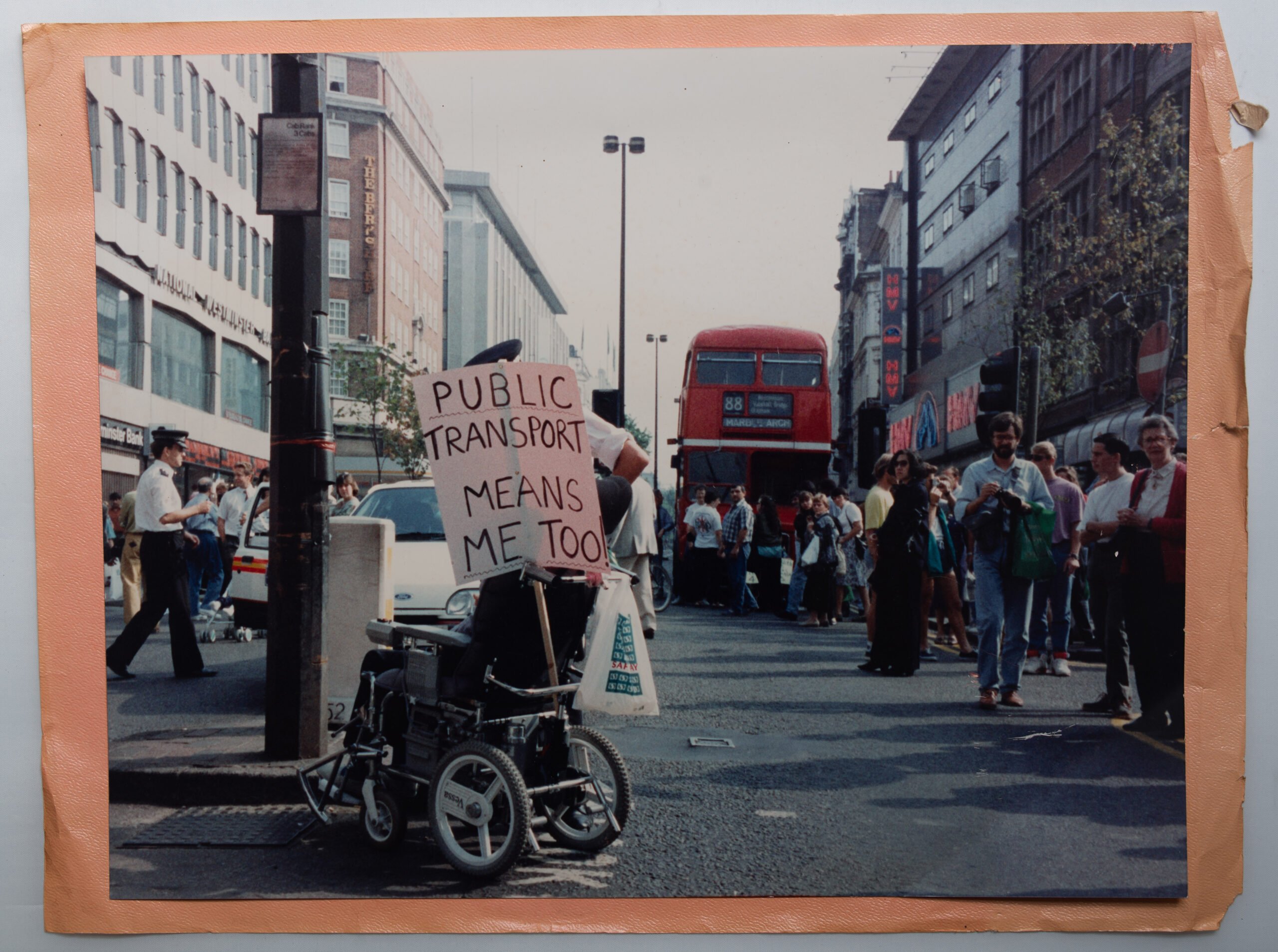
Image: Keith Armstrong from the National Disability Movement Archive and Collection
When I finished school I was singing in a band, got spotted and got a job in television, next thing you know I’m a TV presenter. In 1992 I presented the Thames Telethon, which was a charity fundraising broadcast that raised money for disability charities.
At the time, disabled people were campaigning against the show because they thought it presented them as needing charity. There was also a shift towards the social model of disability, which argued disabled people were held back more by society than by their illness, but I didn’t know much about this.
Eventually I got really lucky. Shortly after the broadcast ended, I met the wonderful Vicky Waddington who spoke to me about the social model during an elevator ride. I honestly went into the lift as one person and came out as another. I’d always thought that I was broken, but when she explained this way of thinking, everything made sense. The world was wrong, not me.
What did becoming more politically active look like for you, particularly while you were still working in television?
I turned down certain programmes and I’d always make sure scripts were to my liking. But one of the things about being freelance is that if you get arrested, you don’t get employed anymore. So I always had to make sure I never got involved in anything too political.
However what I did do, there was myself and another disabled media face at the time called Julie Fernandez, is take part in all manner of posh government dinners and events where we’d sit around a table and talk about the beginning of what became the Disability Discrimination Act.
We essentially sat around a lot of tables with John Major’s government trying to explain the benefits of a law that would allow disabled people to enter society more.
What were those discussions around the Disability Discrimination Act like?
There was always a balancing act going on, some people would try and shrug disability campaigners off by saying, ‘but those really political types, they won’t ever be satisfied’. They were always being used in those meetings as an excuse not to do anything. We would try and tell them, ‘no, they are right, but what you’ve got to do is understand there needs to be a balance.’
Towards the end of the talks, we ended up the word ‘reasonable’ being put into the act and almost everyone with a disability signed. Under the law, employers and service providers have to remove any barriers that might cause problems for disabled people, but this is weighed up on how ‘reasonable’ the changes are, so they can consider costs and how much it might affect their organisation.
I remember doing a programme for the BBC and weighing up the Disability Discrimination Act one year after it was implemented. Everyone kept asking ‘what does reasonable mean?’ and ‘what does it look like?’. There’s no limits and no real punishment, it’s all about individuals taking a case rather than us being able to say, ‘that place is doing something illegal, can you interact?’. There’s not an authority to report to and that sadly has remained into the Equality Act.
You mentioned sitting in with John Mayor’s government, do you think attitudes towards disabilities have changed since then?
I think at the moment we are going through a spasm and people are suffering and they’re looking for someone to blame. Disabled people are being regarded as an expensive luxury we can’t afford.
When I first got my motability car, I was 19, it felt like my whole life had started because I was finally able to get around and do what I want. People never said to me, ‘oh, you’ve got a free car’, but disabled people today are criticised for it.
One of my really good friends called Libby Welsh is deaf and wears cochlear implants. She was born in 1999 and attended a hearing school but was forced to be oral and had to teach herself sign language once she left school.
She only ever really knew what was going on at school if the teacher was facing the class and she could lip read. The shock when I heard that story was insane because I never had to go through something like that.
You’ve been known to challenge the idea of ‘deserving’ and ‘undeserving’ disabled people, can you explain this?
Yes, just recently I was arguing with a guy about this on the radio. He was saying how terrible it was that people who are alcoholics could receive a mobility car or PIP and I was trying to explain that you don’t receive these benefits for being addicted to alcohol, you get them because the alcoholism has caused you to be in ill health.
People can tell I’m clearly disabled because I use a wheelchair, but you can’t see the other disabilities I have, such as ADHD. I also experience really bad chronic pain that can flare up and floor me for days, but nobody really sees that. If I wasn’t paralysed, am I no longer disabled because I would be able to run, skip and jump?
Do you think disabled people are represented differently in the media now?
We have vanished from TV screens, other than Paralympians and the occasional inspiring story of someone learning to live with a disability which is usually used for adverts.
I used to do a show that was on 36 weeks a year for half an hour a week. It had good viewership but more importantly it told stories. You could have stories about how a disabled person went waterskiing and then another time I’d be interviewing someone about their benefits and others who went on to become musicians and comedians. There used to be a rounded view of what disability was, but that’s no gone, I think.
What do you think needs to change?
Everyone’s talking about being included, but they’re not talking about how you do that. If people want to call us expensive, take away our support and not make anything better accessibility wise, then we’re definitely lost.
I might be okay, I’ve got money in the bank, a nice flat, but it’s not about that. It’s about the 19-year-old that might wake up one day and be told they can never walk again. It’s about the 11-year-old starting high school and being terrified about someone discovering their incontinent. Someone like Libby should never have had that experience, not in the 21st century.
Do you think that anger could lead to a new generation of disability campaigning?
I think there is a time coming where the next generation of those types of people get really fed up and start fighting back. I think it’s definitely time for my generation, who did drop the ball once the Disability Discrimination Act came in, to stand up for our peers. If more people felt supported they wouldn’t be so angry and if we tried to help it would be much harder to target us as a bigger group.
Mik Scarlett is the Co CEO of Phab, a charity that brings disabled and non-disabled people together through activities.
Images: Mik Scarlett/Shutterstock/National Disability Arts Collection & Archive
Other interviews:
‘Everybody needs somebody rooting for them’: Emma Williamson on supporting care-experienced children
Interview: Hilary Stephenson on human-centred design for apps and websites
Leave a Reply