
















Emma Williamson, Deputy Leader and Lead Member for Children’s Services at Cumberland Council, talks to us about her journey into the role and why helping others has always been at the heart of her work.
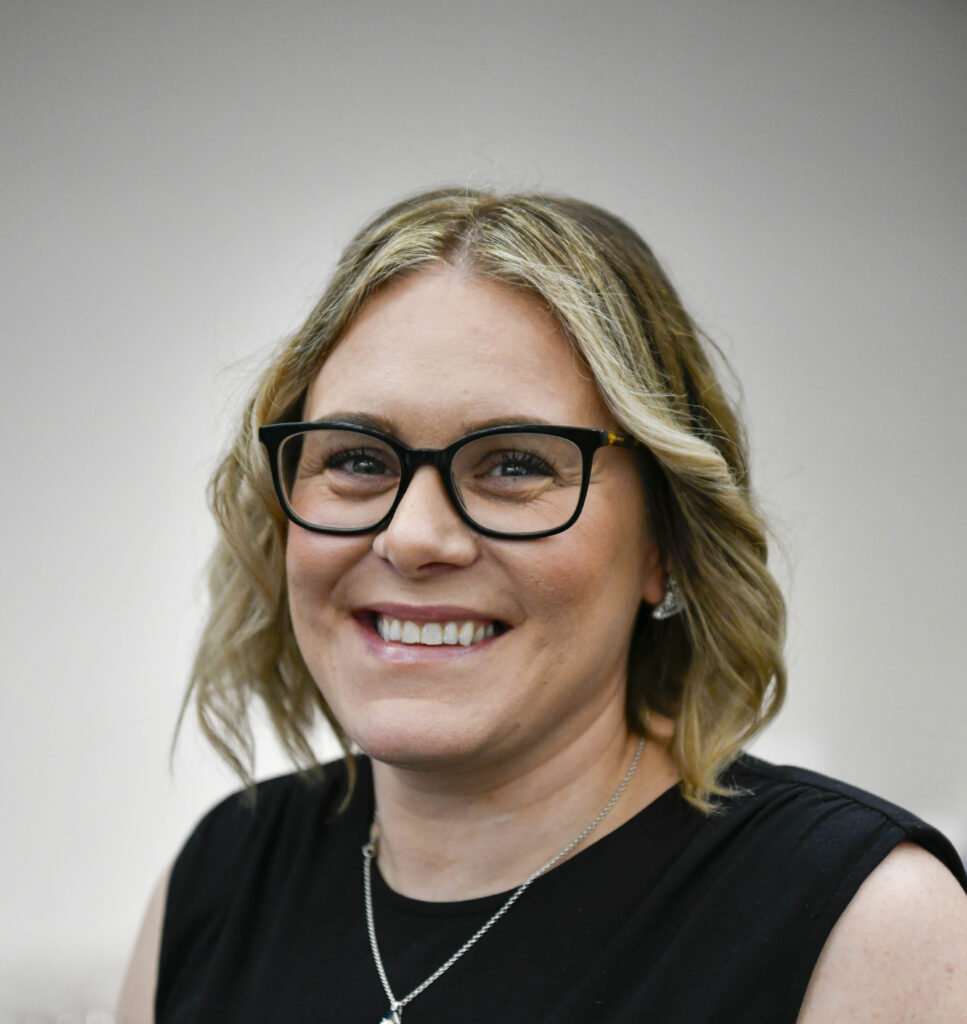
Image: Councillor Emma Williamson via Stuart Walker Photography 2024
When asked why good people sometimes choose the wrong partners, English teacher Mr Anderson replied “We accept the love we think we deserve”. Stephen Chbosky wrote these words in The Perks of Being a Wallflower.
When I was speaking with Emma, it was as though the quote had taken new meaning. Studies show low expectations of care-experienced children can become internalised, shaping how they see themselves and what they believe they deserve. But Emma is determined to challenge that stigma and make these children believe they’re worthy of anything.
Here, Emma speaks to us about the work she does and how she ended up in her current position. She also opens up about her challenging upbringing, an experience that strengthened her determination to help others.
Before working in social care, you volunteered in the drug and alcohol sector. Did this influence your decision to pursue a career in helping others?
It absolutely did. Before my political career, I grew up in a really challenging environment. My dad was an alcoholic and a domestic abuser. These challenges drove me into an area where I wanted to make a difference and use that lived experience to be able to give people a voice who were seldom heard.
This propelled me into doing a lot of volunteering and a lot of practical things on the ground to understand how this affects other people and what kind of support they need.
You went on to volunteer supporting people affected by domestic violence, how did you find that experience?
I have to say it was both rewarding and challenging in its own way. I helped out at the Freedom Project, which is a West Cumbria domestic abuse charity, who I’m still really supportive of now and which we fund as a local authority.
When I arrived, Carol Launder, who founded the charity in her back bedroom, said to me “You need to get some counselling, Emma, before you can be a volunteer.” And when I asked why, she told me I was a victim in my own right. I never ever knew that.
Now, if you look at Cumberland’s domestic abuse strategy, our strapline is built on three priorities which are: preventing domestic abuse wherever possible, supporting victims and survivors and pursuing those who cause harm. Most importantly, the strategy is shaped by lived experience and recognises that children are a victim in their own right.
Ah, the Freedom Project! I saw on your Facebook profile that you were posing with one of their signs, so I was going to ask you about it.
Yes, I feel really supportive of the work they do. We have a huge issue with domestic abuse in Cumberland and the UK. They’re such an important charity because not only do they work with domestic abuse, but they also work with children.
Speaking of working with children, you also volunteered with Action for Children. How was that experience?
I spent time in foster care and really wanted to give back. While working for the charity, I did a lot of play therapy with people who were going through a lot of challenges, from learning disabilities to trauma. That really opened my eyes to the things that we can shape and change if we just listen to people. I think that’s been my biggest driver.
I believe the only way we can support young people and families to thrive is if we listen to the things that they actually need and we try and help them, whether that’s safeguarding, corporate parenting, housing, early help or prevention. It has to be shaped by the people that need and rely on our services.
Cumberland’s domestic abuse strategy is set until 2030, what do you hope it will have achieved by then?
For me, I think it’s really important that we teach our children and young people about healthy relationships. If you ever hear anything about me, early help and prevention is my life’s drive.
When I was a child there wasn’t a lot of support, so I’m really keen to make sure we have trauma-informed support and safe accommodation available.
Another key strand for me is pursuing those who cause harm, I will absolutely hold perpetrators accountable. I think it’s really important to understand that they are the ones who caused the harm, because there’s a narrative around ‘the victims should have just left’, but when you actually work with these families and children, you understand that they shouldn’t have been in the situation in the first place.
I am advocating for better criminal justice outcomes and we’re working closely with our criminal justice colleagues, our police, youth offenders, all of those on behaviour change programmes, which are really important.
In 2022 you were elected as Deputy Leader of Cumberland Council and Executive Member for Children and Family Wellbeing, what led you to this point?
In 2017, the county council were holding elections and the Labour party couldn’t get women to stand. At first I didn’t think I could run because I wasn’t cut from the right cloth – I’ve got my past that was really challenging and I didn’t think anybody would want me.
I had a real defeatist look on what I could achieve, but after I got elected I found my voice to represent people who are rarely heard.
My education was also really important. I left school at 13 with no qualifications, I went to 12 junior schools, four senior schools and moved house every couple of months. My childhood was a really turbulent time which led to me getting no qualifications. But, in 2013 I went back into education and got my GCSE’s, my A-levels and I went to university to study community social care.
The course was filled with a lot of history, a lot of welfare and it just drove me forward and gave me the base to be able to go into this role and feel confident that I could make a difference.
That’s a really inspiring story. I saw on your LinkedIn you also have a masters, which is incredible.
I do, but that’s not because I’m clever. People think those who go to university are clever, but I was always up until 1am finishing assessments. I put the effort in and I also had some really passionate tutors, which made a difference.
I think everybody needs a cheerleader, it doesn’t matter whether it’s a teacher, a doctor, a neighbour, just everybody needs somebody rooting for them and I’ve just been really fortunate along my journey. I’ve had some really bright, hardworking people see something in me and I’ve got an amazing husband and daughter who have been really supportive.
During your time at the council, what are you most proud of?
I’m really proud of creating the Enrichment Fund, which replicates the bank of mum and dad for care experienced young people who didn’t have one.
It’s a pot of money that young people can spend on anything they want, it could be education, a trip to London, driving lessons, or it could even go towards a house deposit. We launched the scheme in 2024 and in the same year I worked with Cumbria Youth Alliance to host a big ball that raised £57,000 for the fund. The reason I did it is because these young people need financial backing, which also gives them support with apprenticeships and internships.
One of my greatest achievements is also getting a ‘good’ rating from Ofsted. Under the previous authority, we were ‘required improvement’ and before that we were ‘adequate’ and that just wasn’t good enough for me.
The rating also wasn’t just about the inspection and the outcome, but all of the feedback we got from our partners and from the young people was just so positive, and that, for me, I mean, I cried my eyes out.
The Enrichment Fund is the reason you won the MJ Award, how did it feel when they called Cumberland’s name as the winner?
We were all incredibly proud, but what made the experience even better is one of our care experienced young people – Kate – got to go to London and accept the award. She’s been on such a journey, she’s got her own housing and a paid internship, so accepting the award just topped it all off.

Image: Cumberland Council, winners of the Innovation in Children’s and Adults’ Services MJ Award
I will also say that the award reflects collaboration and innovation. Sometimes, I think when you’re a politician, you get ruled out of projects, but everything we’ve achieved, and it is ‘we’, has been collective.
How did it feel to see so many organisations come together to support the Enrichment Fund at the 2024 Ball?
I was overwhelmed, 250 people came to the ball and they were from all walks of life. When I stood up in the room and saw everybody there it was amazing. The whole ethos around the ball was to reduce stigma around care experienced people, because a lot of them are spoken to like they’re inferior, but the night was about celebrating how awesome they are.
From the ball, we’ve got three care experienced people in apprenticeships and 18 in apprenticeships altogether. It was a really beautiful night and people are still talking about it today.
What do you hope the future holds for you at Cumberland?
I hope we are able to massively reduce our cared for children figures because our early help prevention programme is working, and I hope we can continue to have good quality housing for when our young people turn 18.
And I just think being really ambitious for our young people, because my passion has always been ensuring children and families have the best possible start in life.
The result we received from Ofsted now means we are being recognised nationally, so we’re going to Parliament in November to showcase an exhibition our young people have done on what it’s like being care-experienced. They have created paintings, drawings and poetry and now they want to share their experiences with the rest of the country, I think it’s fantastic.
Images: Stuart Walker Photography and the MJ Awards
Other interviews:
Staff room: talking health and social care with Tameside Council
‘People are all we’ve got’: why care deserves its moment in the spotlight
Leave a Reply