














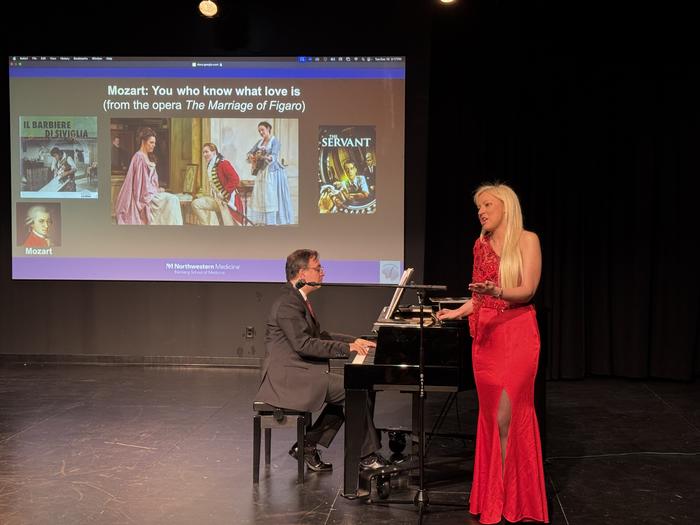
A live music programme combining concerts, music appreciation and social interaction could improve mood and help tackle isolation among people living with Alzheimer’s disease and other forms of dementia, according to new research.
Researchers at Northwestern University in Chicago evaluated ‘Musical Museum’, a concert series designed specifically for people with neurocognitive disorders and their caregivers. The programme combines live performances with short talks explaining the music before ending with question-and-answer sessions and informal receptions where attendees can socialise.
The study, published in the journal Frontiers in Neurology, found participants consistently reported improved mood after attending the sessions, while also rating the programme highly for enjoyment, intellectual stimulation and overall satisfaction.
Researchers said the programme was developed to address three areas often affected by dementia: emotional wellbeing, cognitive stimulation and social isolation.
NMMP director and corresponding author Dr. Borna Bonakdarpour, a classically trained pianist (pictured above) said: ‘Music stays intact for a long time for dementia patients, so the Musical Museum is a very good way for them to emotionally regulate and provide intellectual and cognitive stimulation. We always want to keep their brains engaged.’
Unlike traditional music therapy, Musical Museum blends familiar songs with unfamiliar pieces, accompanied by accessible explanations about the history, meaning and structure of the music. Sessions are also deliberately designed to be dementia-friendly, with shorter performances, simple visual presentations, trained staff and post-concert opportunities for conversation.
Over 11 sessions, the programme attracted 551 attendances and generated 254 anonymous survey responses, most from people with dementia attending alongside a caregiver. Participants gave the programme the highest possible median score for overall satisfaction and enjoyment, while intellectual stimulation also received consistently positive ratings.
The researchers also found a significant improvement in participants’ self-reported mood after each event. Open-ended feedback suggested many valued not only the music itself but also the opportunity to meet others facing similar experiences in post-concert receptions designed encourage social interaction
Bonakdarpour said: ‘It’s common for individuals with dementia to isolate because they might feel nervous or embarrassed, especially if their language has declined, so this is a great way to get them out, and it’s a nice opportunity to see them outside the clinical setting.’
One participant said: ‘This programme provided peace, relaxation and occasionally a cathartic release of tears.’ Another called it: ‘a wonderful opportunity to expand our contacts with individuals undergoing similar experiences.’
The programme proved practical to run, with average attendance reaching around 50 people per session and costs averaging about $37.70 (£28) per attendee. Researchers said the model could be adapted by community organisations provided it retained its three core elements of live music, educational content and opportunities for social engagement.
The team now plans to carry out more rigorous research, including controlled trials using physiological measures such as brain activity, heart rate variability and blood pressure, alongside psychological assessments, to determine whether programmes like Musical Museum can deliver measurable long-term benefits for people living with dementia and their caregivers.
The full research can be read here.
Photo: Kristin Samuelson, Northwestern University
Leave a Reply