





Haringey, Barnet, Camden, Enfield and Islington joined forces with councils nationwide on the ‘Odds Are They Win’ campaign, reaching 20 million people during the World Cup and driving 125,000 direct clicks to gambling support services.
 Will Maimaris, Director of Public Health at Haringey Council, tells us more:
The World Cup is over. Spain have lifted their second trophy. Football fans need only wait until the 21st of August for the new Premier League season to kick off. Football may be taking a brief hiatus, but the heavy volume of gambling advertising shows no signs of slowing down.
The 2026 World Cup is estimated to be the biggest gambling event of all time, with an estimated $50bn placed in bets1. Matches running from early evening into late night in the UK extended the window to bet, whilst new broadcasting arrangements enable licensed operators to livestream matches within their applications. This continuous, and likely solitary in-play betting environment heightened the risk of immediate financial and emotional distress against the backdrop of an aggressive, well-funded advertising landscape2.
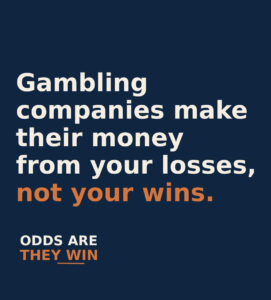
The gambling industry in Great Britain retains an estimated £16.8 billion annually from customer losses, with online football betting alone accounting for over £1.3 billion of that total3. These figures represent wealth taken directly out of local households, impacting family stability, housing security, and mental wellbeing.
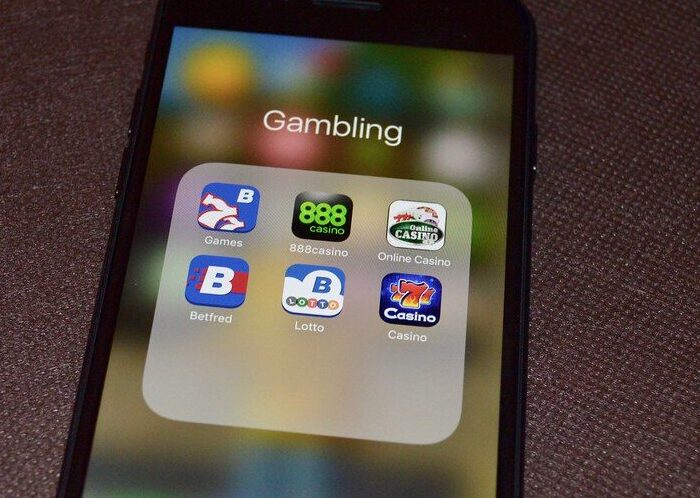
Gambling advertising is everywhere. It is kept highly visible and readily accessible through sports sponsorship, personalised digital advertising, social media content, free-bet offers, odds boosts and in-play promotions. Online platforms enable operators to target advertising using customer data, while partnerships with sports teams, broadcasters and major events help embed gambling within the wider sporting experience.
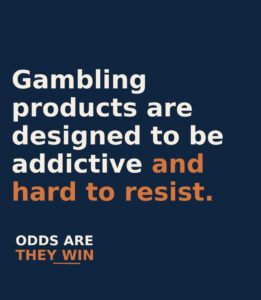
This approach maintains gambling’s visibility by consistently associating it with excitement, entertainment and sporting fandom. Promotional incentives such as free bets, welcome offers and ‘risk-free’ promotions are frequently accompanied by safer gambling messaging, creating the impression that harm can be avoided through individual choice alone. While framed around responsible participation, this dual approach sits alongside products and marketing strategies specifically designed to encourage engagement and repeat betting.
Counteracting industry messaging: The ‘Odds Are They Win’ 2026 Campaign
Across North London, local authorities and health partners have come together to form a unified response to this challenge. Utilising an approach which was successfully rolled out in Greater Manchester during the previous tournament, we refreshed and launched the ‘Odds Are They Win’ campaign for 2026 which disrupts that dominant industry narrative4.
By presenting clear, evidence-based insights into industry tactics, it reframes gambling harm as a predictable outcome of industry design rather than personal responsibility, building a more compassionate and informed response.
In North London, this has seen the coming together of the public health teams of Barnet, Camden, Enfield, Haringey, and Islington. By joining forces with Mind in Haringey, Thrive LDN, CAN Digital, and the gambling charity, Chapter One, our coalition coordinated the foundations for the 2026 iteration of this campaign.
Such is the appetite for this approach, a total of 30 local authorities across London and England, with the Convention of Scottish Local Authorities supporting delivery across Scotland, also adapted and bought into the paid campaign. Many more councils are utilising the shared communications toolkit to promote the message organically.
 Overall, the campaign has shown signs of success across all 30 participating local authorities, generating more than 20 million impressions. This extensive digital visibility has driven close to 125,000 direct clicks across Snapchat, Meta, and Reddit channels through to bespoke, regional campaign landing pages. In a public health context, a click through to our dedicated website represents a deliberate, purposeful action by a user looking for help or information
Insights to date confirm that our specific messaging themes are aligning accurately with identified tournament risk factors. At a time when mobile devices are flooded with betting promotions, this suggests that the messaging has a clear relevance. When looking at the national picture, messages highlighting the impact of gambling on personal relationships and how betting applications are designed to win generated the highest overall engagement volumes. However, we have observed distinct regional variations in what performs best. For example, in North Central London, adverts focusing on the addictive nature of gambling products secured the highest interaction rates on social platforms. Across all areas, context-specific hooks about late-night matches and financial losses consistently achieved the sharpest immediate interaction rates.
Importantly, the campaign is providing timely and direct referral loops to support networks like the National Gambling Helpline and NHS gambling support services. When a resident clicked on an ad during the tournament, they are routed immediately to an effective pathway to free, confidential assistance available to them both at a local and national level.
What can we learn from this campaign?
The campaign has generated valuable insights that will help shape future gambling harm awareness activities. A key strength of the campaign was its use of real-world digital engagement during a major sporting tournament. Rather than relying on hypothetical scenarios or controlled research environments, the campaign captured naturalistic audience responses at a time when exposure to gambling marketing and opportunities to bet were at their highest. This has provided an authentic evidence base for understanding how public health messaging about gambling harms performs in a live environment.
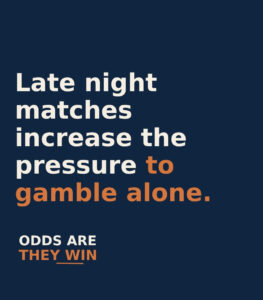 The campaign also generated a substantial body of digital intelligence across Snapchat, Meta and Reddit. These insights will be used to inform future health interventions, particularly around audience targeting, message framing and platform selection. Late-night scheduling, structural critiques of industry practices and relatable top line messages resonated with audiences, providing a strong foundation for future digital campaigns.
Perhaps the most important lesson learned is that regional collaboration can significantly strengthen public health communications. Many local authorities beyond North Central London, teamed up to pool resources and form ‘sub-regional’ teams. The collaborative delivery model produced several unanticipated benefits. By pooling expertise, resources and evaluation, local authorities can establish a digital footprint capable of competing more effectively with commercial advertising and delivering a consistent, evidence-based narrative at scale. This campaign provides a clear precedent for future collaborative approaches to tackling gambling-related harms.
Importantly, the campaign reinforced the value of maintaining a consistent public health narrative. Language such as ‘safer’ and ‘responsible’, promotional mechanisms like introductory offers and “free bets” must be challenged as we strive to reduce the information asymmetry gap that the public face. This approach helps shift attention from individual blame towards the wider commercial and environmental factors that contribute to harm, while maintaining a supportive tone.
This campaign and many similar campaigns across the country are clear: it’s not your fault, you’re not alone. Gambling harm can affect anyone, and stigma stops many people asking for help.
References
Leave a Reply