
















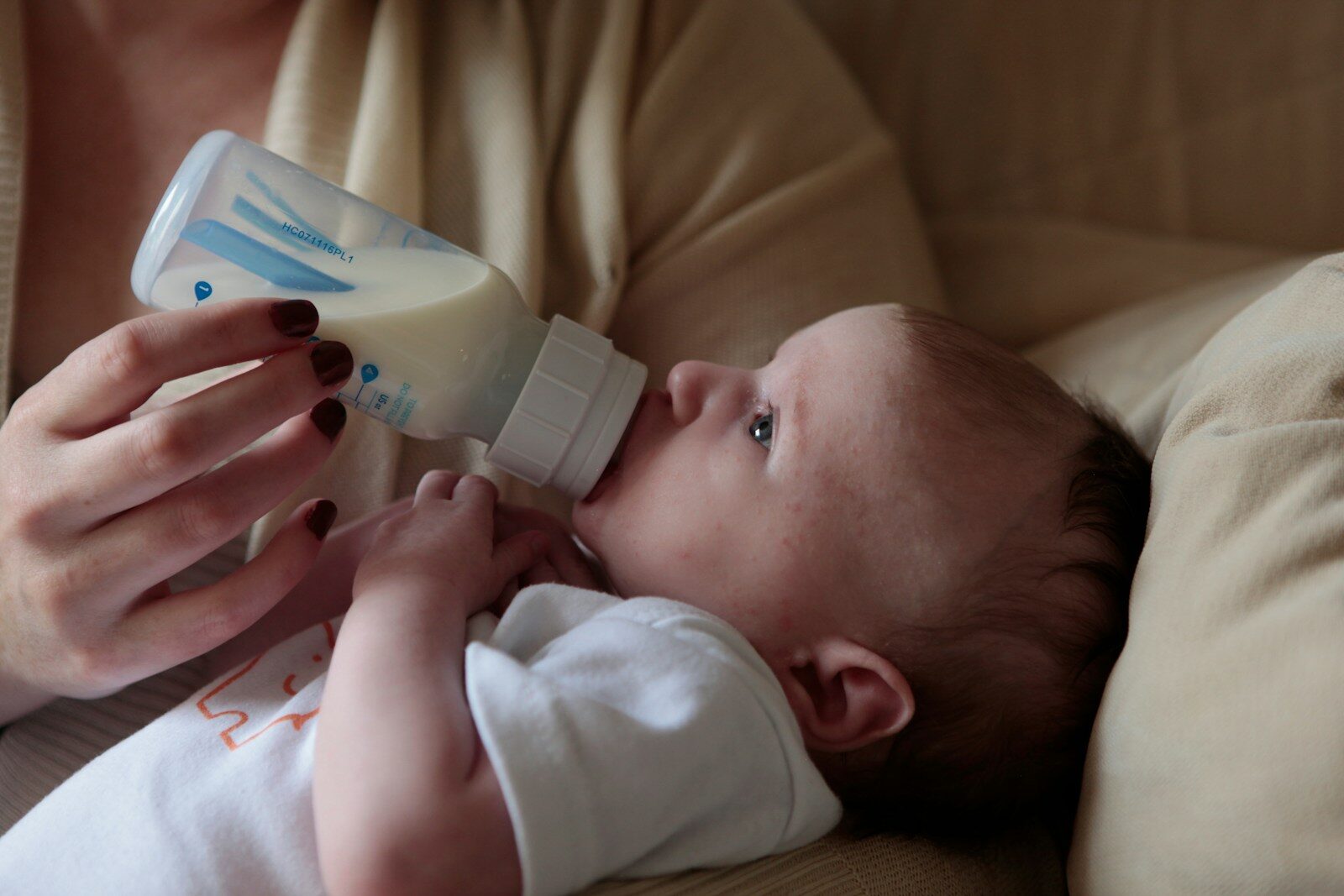
Soaring infant formula prices are pushing some families into debt and forcing them to make decisions that could harm their babies, a new study shows.
First-of-its-kind research from Swansea University looked at the experiences of 281 parents across the UK who used formula to feed to their babies.
Funded by the Medical Research Council, the study found that almost all of the parents involved said the cost of feeding their children had affected their mental health. Some described anxiety, guilt and isolation, while others said the pressure had become so overwhelming they regretted having a child.
One parent said: ‘Sometimes I regret having this baby and I feel awful about having those thoughts because I love her so much but I’m not a good mum to her.’
The cost of formula had also led some families to cut back on essentials or make changes that could put babies at risk. Almost 40% reported unsafe practices including reusing leftovers, adding extra water or reducing sterilisation.
Meanwhile, 43% had fallen behind with bills and 47% had taken on debts they found difficult to pay.
Some parents also turned to cheaper feeding options. Nearly half introduced solid food before their baby was ready, while 45% switched to milk intended for older infants.
For one in 10, the situation had become so desperate that they took formula from a shop without paying.
Amy Brown, Professor of Public Health at Swansea University, who led the research, said: ‘Infant formula prices were high before the cost-of-living crisis, and rose up to 45% between 2021 and 2023.
‘A recent report by the Competition and Markets Authority identified excessive price rises for infant formula and exceptionally high profit margins of between 50-75%.’
‘This is a significant issue because infant formula is not a discretionary product,’ Brown continued. ‘When infants are not breastfed or not fully breastfed, infant formula is needed to support growth and development.’
The research, which can be read in full here, also highlighted the difficulties faced by mothers who had hoped to breastfeed but were unable to get the support they needed. For some, the struggle of paying for formula caused a second wave of guilt and anxiety.
Brown added: ‘We expected our research to reflect some of the experiences we had been seeing in the media but were shocked at how many families it was affecting and how deeply.
‘Mothers described how the lack of support and action on the issue had left them feeling heartbroken and feeling like they had failed. Some attributed it to causing postnatal depression, especially when they really wanted to breastfeed and felt as if they had let their baby down twice.
‘Our research shows that we urgently need more holistic support across infant feeding that both ensures more women who want to breastfeed can do so, and those who are using formula have reliable access to affordable products that put babies and parents first.’
Image: Lucy Wolski/UnSplash
In related news:
Leave a Reply