










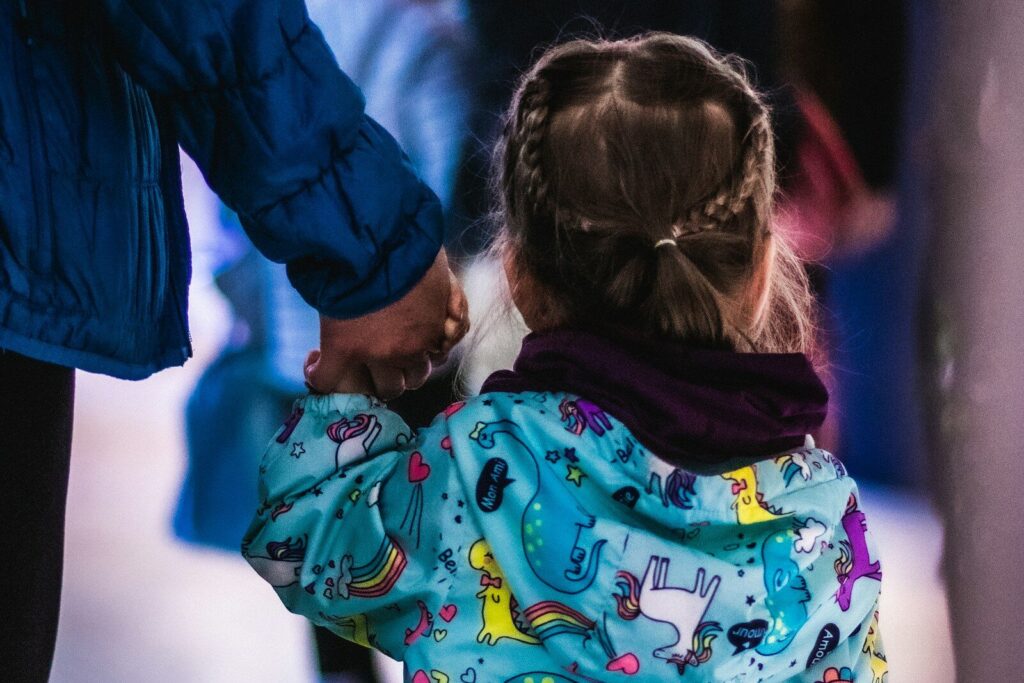


12% of children say they don’t feel safe in their local area, according to a new report published on Monday by the Children’s Commissioner.
Dame Rachel de Souza, analysed about 100 measures covering education, health, social care and safety to assess the differences between children’s experiences across England.
The number of children who said they felt unsafe varied considerably between areas. In Bedford, 6.7% of children said they felt unsafe compared with 24.9% in Croydon.
Speaking to BBC Radio 4, Dame Rachel said children had described seeing knife crime ‘virtually daily’, people urinating on their school and children being unable to go to the park because it was ‘so full of crime’.
The report, Childhood Lottery, found children’s experiences of growing up were shaped by a ‘postcode lottery’, with differences in the services available to them depending on where they lived.
Dame Rachel described the findings as a ‘litany of failures’ and wrote she couldn’t see the status quo as ‘anything less than a national emergency’.
Middlesborough, Hounslow, Bradford, Nottingham, Halton, Peterborough, Leicester, Liverpool, Sunderland and Medway were ranked among the hardest places to grow up.
Meanwhile, Cheshire East, Merton, Surrey Richmond upon Thames, Hertfordshire and Cheshire West were found to be the ‘least challenging places to be a child’.
Differences in services across England
The report also highlighted disparities in children’s access to health and education services.
More than one million children had been referred to mental health services in 2024-25, while 55% of children didn’t achieve a good standard in English and maths GCSEs. A million people in the UK aged 16-24 were not in employment, education or training.
In Leicester, the reported wait for a child to be referred for mental health assessments was six days, compared with 118 days in Hampshire and the Isle of Wight.
In Richmond upon Thames, 70% of children achieved good grades in English and maths GCSEs, compared with 31% in Knowsley.
Spending on youth services per teenagers was zero in four local authorities.
Dame Rachel said poverty along couldn’t explain the differences in children’s outcomes, with Haringey in north London scoring highly in the assessment despite having high levels of deprivation, while Cambridge ranked lower despite being one of the least deprived areas in England.
‘There is a poverty issue, but there are also service issues, and capacity issues,’ she told the BBC.
‘What I want to see is rocket-boosted support for these places.’
Call for action
Following the publication of her report, Dame Rachel has called for minimum standards for children’s services and an emergency fund to pay for improvements where provision was falling short.
She said she had previously resisted the call to ‘reduce everything to funding’, but the ‘extent of failure is too great’.
She also recommended that larger local authorities and strategic authorities, including areas with mayors, should have a deputy mayor for children responsible for assessing the impact of policies on young people.
Education Secretary Lucy Powell said the government would make sure ‘no child is held back by where they grow up’.Every child deserves to thrive, wherever they live, and we know that there are many children all over the country who are doing just that.
‘As this data shows, every area has different challenges which no single organisation can tackle alone. It is important that local partners work together to address those, and to make sure that all children and families get the support they need, when they need it.’
Image: Ricky Turner/UnSplash
In related news:
160 children waiting for adoptive families in West Yorkshire
Autistic people left in mental health hospitals for years, research shows
Leave a Reply