











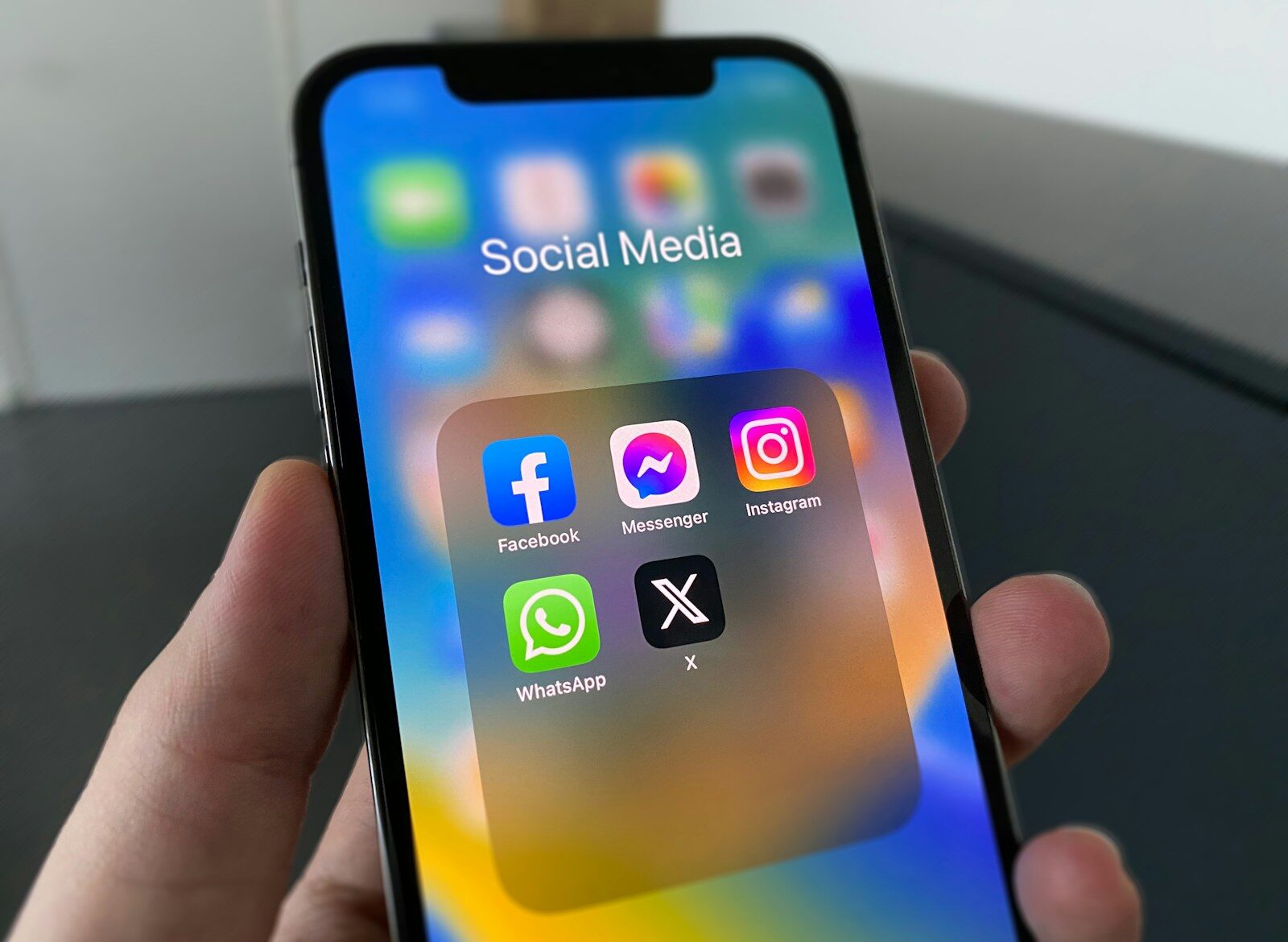
As the government ramps up efforts to protect children online, researchers question the evidence behind social media bans.
The UK government’s consultation on children’s online safety closed last month amid growing political momentum behind tougher restrictions on young people’s digital lives.
Soon afterwards, the minister for online safety, Kaishka Narayan, travelled to Australia to examine its world-first ban on social media accounts for under-16s, due to take effect from December 2025. Meanwhile, technology secretary Liz Kendall joined G7 discussions in Paris on technology policy.
However, a new study suggests the evidence underpinning age-based bans is far weaker than many policymakers claim.
The report, led by Dr Monika Neff Lind of the University of California, Irvine, argues that political support for social media bans has outpaces the available scientific research.
Lind points to comments made by French president Emmanuel Macron, who said: ‘Banning social media for those under 15: this is what scientists recommend.’
The report also highlights remarks from the US senator Brain Schatz, author of the Kids Off Social Media Act, who stated: ‘Studies have revealed that when children and teens reduce or eliminate exposure to social media for longer than a month, their mental health benefits. Proponents of youth social media bans claim that we have strong scientific evidence showing that bans will improve teenagers’ wellbeing.’
Despite this, Lind disputes the conclusion. She said: ‘As a clinical psychologist and parent, I would be thrilled if this were true, but it is not. We do not know how social media bans will affect youth because we have never studied that question.’
She also highlights a contribution to the debate by American senator Brian Schatz, author of the Kids Off Social Media Act, who proclaimed: ‘Studies have revealed that when children and teens reduce or eliminate exposure to social media for longer than a month, their mental health benefits. Proponents of youth social media bans claim that we have strong scientific evidence showing that bans will improve teenagers’ wellbeing.’
Dr Lind responded: ‘As a clinical psychologist and parent, I would be thrilled if this were true, but it is not. We do not know how social media bans will affect youth because we have never studied that question.’
The team reviewed the available evidence on whether restricting social media use improves wellbeing and found mixed results. Even among adults, where research is more extensive, the evidence was described as weak. Around 40% of studies found either no effect or negative outcomes, including increased loneliness and lower life satisfaction.
The researchers also warned that restrictions could create new problems. Age-verification systems, particularly those relying on selfie uploads, raise privacy concerns and have been shown to be less accurate for younger faces and people of colour.
Questions also remain about whether bans can be effectively enforced. Three months after Australia introduced its restrictions, authorities reported almost 70% of social media accounts belonging to under-16s remained active.
The report, which can be found in full here, argues widespread restrictions risk damaging relationships between teenagers and their parents or carers, noting that most young people oppose blanket bans.
‘Big Tech has become infamous for ‘moving fast and breaking things’. Policymakers rushing to enact these bans risk repeating Big Tech’s mistakes and compounding the problems the bans are trying to solve,’ Lind added.
‘We cannot ban our way out of a youth mental health crisis. Rather than take things away, we should make things better.’
Three months on the clock
On the subject of trying to the digital world better, today (8 June), Keir Starmer has told tech companies such as Apple and Google to block access to naked images on smartphones and other devices for under-18s.
The prime minister said firms must either activate built-in features or update software to prevent children from taking, sending or viewing sexually explicit images.
Speaking at London Tech Week, Starmer said: ‘This is not an impossible challenge. These are some of the most innovative companies in the world and I believe they can solve it.’
If companies fail to act within three months, they will face legal action which could include fines or, as a last resort, criminal liability.
‘Legislation could cover operating system providers and others in the supply chain, such as retailers, and will not affect the use of devices owned and used by adults who verify their age,’ Starmer added.
Lynn Perry, chief executive of Barnardo’s, welcomed the news with open arms, stating ‘far too many children are exposed to harmful sexual content online or are pressured into sharing sexual images.’
‘Barnardo’s research found that a quarter of all young people have seen a nude photo which was originally sent privately and then shared further – while around one in seven 13- to 15-year-old girls have been asked to share a nude photo of themselves. The impact of this can last a lifetime,’ she continued.
‘This is a strong step towards keeping children safe and we look forward to seeing how these proposals will work in practice. Good intentions are not enough, however, so they need to be backed up by strong regulation and enforcement – as well as keeping pace with how quickly online harms evolve.’
Leave a Reply