

















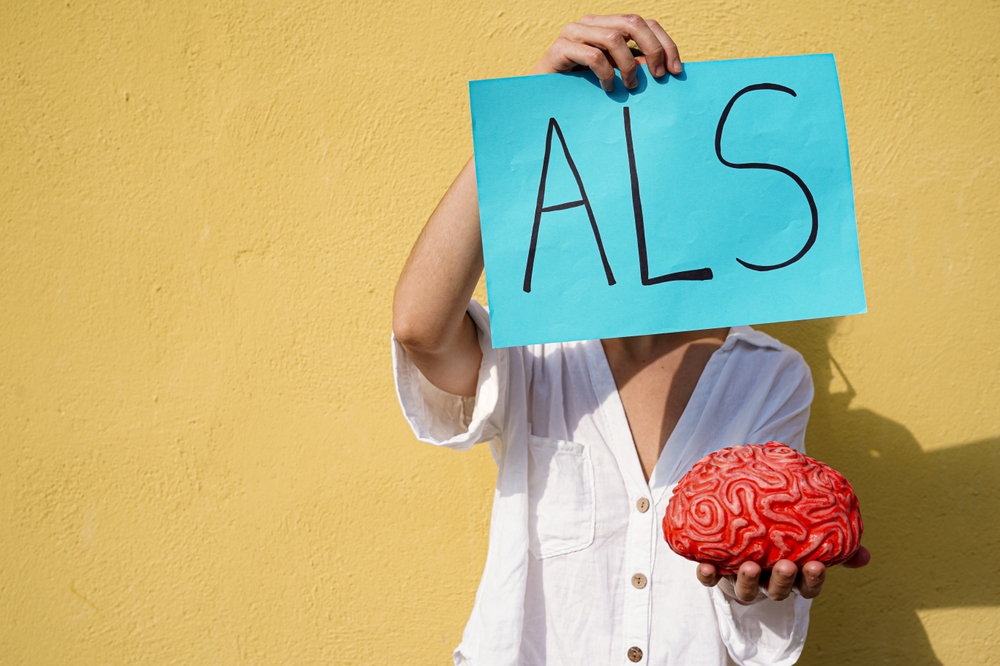
Twenty international research teams have been awarded £2m to use artificial intelligence (AI) in the search for new drugs for amyotrophic lateral sclerosis (ALS).
ALS is a progressive disease that damages nerve cells in the brain and spinal cord. Over time, this stops muscles working properly, affecting movement, speech, swallowing and breathing.
Currently, the condition has no cure.
The funding is part of the Longitude Prize on ALS, a £7.5m global competition aimed at speeding up the discovery of new treatments.
Nearly 100 teams from universities, technology firms and medical research institutes around the world entered the competition after it launched in 2025.
Each of the 20 selected teams will receive £100,000 to support early-stage research. They will use patient data, including genetic and biological information, to help identify targets that could lead to new treatments.
’10 months on from launch, we are celebrating 20 highly collaborative and creative consortiums who have teamed up with a shared goal in mind – to find a treatment for ALS,’ Tris Dyson, managing director of Challenge works, who also lives with ALS
‘I was confident that the time was right to launch the Longitude Prize on ALS, given huge advances in AI.
‘However, I didn’t quite realise just how impressive a line-up of researchers and innovators it would attract. Beating ALS requires the boldest and brightest innovators – and that’s what we have found.’
In 2027, 10 teams will receive additional funding to develop their ideas further, followed by five teams in 2028. A final winner is expected to be announced in 2031.
Dr Yentli Soto Albrecht, researcher at the University of Pennsylvania and someone who has a high genetic risk of ALS, added: ‘I know that, if nothing changes, I will become one of the one in 300 people who will develop ALS in their lifetime.
‘Having watched what this disease took from my father, I not only grieved his loss but also faced the reality of what lay ahead for me. My world crumbled. I built another, around my MD-PhD and the work it made possible.
‘I am committed to finding a treatment for ALS before the disease takes me too, a door the Longitude Prize on ALS has opened. There’s a real chance that, across these 20 teams, we discover the perfect drug target – and what an honour it is to play a part in this fight.’
Image: Shutterstock
In related news:
Leave a Reply