


















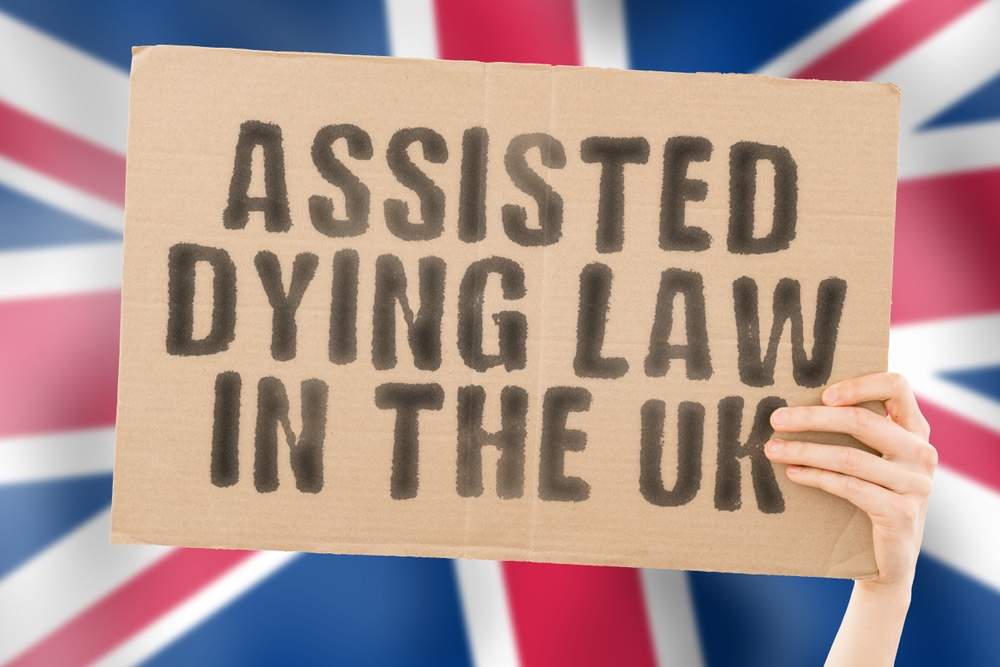
A bill to legalise assisted dying for terminally ill people in England and Wales is set to fail on Friday after running out of time to become law.
The Terminally Ill Adults (End of Life) Bill would have allowed adults with fewer than six months to live to apply for assisted death, subject to approval from two doctors and an expert panel.
For the last 17 months, the legislation has been making its way through parliament, but stalled in the House of Lords after more than 1,200 amendments were proposed by peers.
A debate taking place today (Friday 24th April), is expected to focus on the bill’s procedural collapse rather than its contents.
Labour MP Kim Leadbeater, who introduced the bill towards the end of 2024, said she would continue efforts to revive it. She insisted she will ‘keep pushing for a safer, more compassionate law until parliament reaches a final decision’.
More than 800 amendments were tabled or supported by just seven peers, including professor of palliative care Baroness Finlay of Llandaff and former Paralympian Baroness Grey-Thompson.
Tanni Grey-Thompson raised concerns about the efficacy of life-ending drugs and how they might be administered during pregnancy. She said: ‘The bill fell because it’s badly written. It needs to be much, much tighter than what we’ve got.’
She argued the 1,200 amendments highlighted the complexity of the legislation. For example, her suggestion to use the term ‘disabled people’ instead of ‘people with disabilities’ required 12 separate amendments.
‘Our role is to kind of look at the geeky technical stuff. I think it’s been difficult because the pressure to nod stuff through has been quite intense. It’s not just a handful of people that are opposed to it.’
A letter signed by nearly 200 peers claimed the bill had been derailed by ‘deliberate delaying tactics pursued by a minority of peers opposed to its passage’.
‘We regret that this failure will disappoint the overwhelming majority of people in this country who support a change to the law and were looking to parliament to enact it,’ the letter read.
‘It is now for the elected chamber to decide what should happen next. We believe parliament must come to a decision on choice at the end of life as soon as possible.’
Sarah Wootton, chief executive of Dignity in Dying, said a small group of peers she called ‘implacable opponents of assisted dying’, dominated Lords debates and tabled amendments to prolong discussion of the bill.
‘It’s absolutely shameless what a tiny group, less than 1% of the unelected, the upper house, has done,’ she continued. ‘Their role is to scrutinise, not to block.’
Andrew Copson, chief executive of Humanists UK, maintained that ‘Nobody can seriously argue this bill has not been scrutinised enough.’
‘Assisted dying has faced unprecedented scrutiny, more than any private member’s bill in history, even before it reached the Lords,’ he said. ‘Opponents often talk as though this is an entirely novel question, when in reality, assisted dying laws are already operating in more than 36 jurisdictions serving hundreds of millions of people. This is one of the most examined reforms in parliament, not one of the least.’
In 2025, the Isle of Man became the first British Isles to pass an assisted dying bill, but it is yet to receive Royal Assent. This usually takes around three to six months, but the Ministry of Justice has halted the process, claiming more safeguards are needed in the legislation.
In similar vein, Jersey became the second British Isles to pass its own bill in February, though it is also waiting to be approved by the King.
What happens next?
The next parliamentary session is expected to begin after the Kings speech on 13th May, when the government will set out its legislative priorities for the year ahead.
A ballot will then determine which private members’ bills (PMBs) are considered first.
Meanwhile, charities working in palliative and end-of-life care have urged the health secretary, Wes Streeting, to not let the momentum generated by recent public debate on death be ‘wasted’.
In an open letter, organisations including Age UK, Hospice UK and Marie Curie described the moment as ‘critical’ to turn ‘shared ambition into actions’ and to ‘deliver the improvements in palliative and end-of-life care’ that are urgently needed.
Image: Shutterstock
In related news:
DJ workshop tackling violence and anti-social behaviour in Gateshead
Suicide remains the leading cause of maternal deaths, report warns
Leave a Reply