

















Health officials are investigating 20 cases of meningitis linked to Kent, an increase from 15 reported earlier on Tuesday.
The UK Health Security Agency (UKHSA) said nine cases have been laboratory confirmed, while 11 remain under investigation. Six of the confirmed infections are the meningitis B (MenB) strain.
A statement from UKHSA issued this morning (18th March), said: ‘All those affected who are currently linked to the outbreak are young adults. UKHSA is aware of a baby with confirmed meningcoccal group B infection who is not currently linked to the outbreak but UKHSA will continue to investigate this case.’
Currently, it is understood the outbreak started between 5th and 7th of March after students from the University of Kent visited Club Chemistry. Around 2,500 doses of antibiotics have been issued to close contacts so far.
Trish Mannes, UKHSA regional deputy director for the South East, said: ‘Around 2,500 doses of antibiotics have now been administered across sites in Kent and we continue to encourage close contacts to come forwards for the treatment.
‘This includes those offered at the University of Kent and anyone who visited Club Chemistry between March 5-7. This is the main intervention that will help protect people and half the spread of the outbreak.
‘As a further precaution and together with the NHS, we are beginning to roll out a targeted MenB vaccination programme.’
The vaccine will initially be offered to 5,000 students living on the University of Kent’s Canterbury campus, with scope to expand the programme if needed.
However, Oliver Picard, chair of the National Pharmacy Association, said there was currently no supply of MenB vaccines available privately. Speaking to BBC Radio 4’s Today programme, he said: ‘Unfortunately, that supply has run out, and most of our distributors, wholesalers have no stock. And whilst we’re hearing that there may be some stock in the system, it is taking its time to come into our fridges. There’s no date of resupply.’
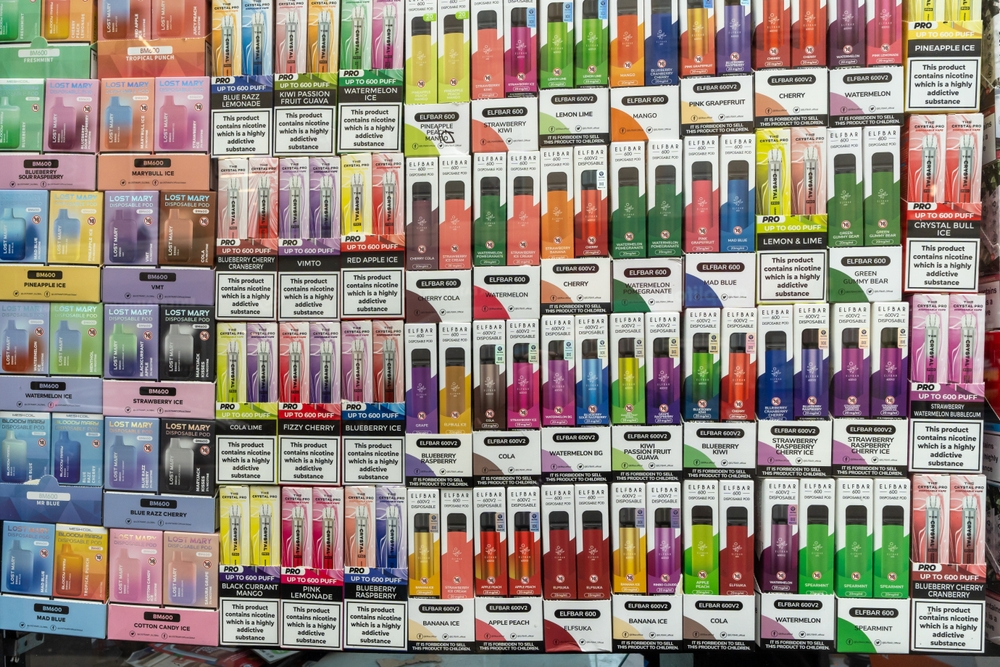
Secretary of State Wes Streeting addressed the House of Commons on Tuesday in which he said the general risk is ‘very low’ from this outbreak, even if the disease itself is ‘extremely serious’. He also explained that the disease is spread via close personal contact, such as sharing drinks, vapes and kissing.
However, since the outbreak started, two people have sadly passed away including a 21-year-old university student and a sixth form pupil at Queen Elizabeth’s Grammar School in Faversham.
Susan Hopkins, chief executive of the UKHSA, called the current epidemic a ‘super-spreader event’. She said: ‘I can’t say where the initial infection came from, how it’s got into this cohort, and why it’s created such an explosive amount of infections. I can say that in my 35 years working in medicine, in healthcare and hospitals, this is the most cases I’ve seen in a single weekend with this type of infection.
‘It’s the explosive nature that is unprecedented here – the number of cases in such a short space of time. NHS were initially managing it as a major incident in the region but they have now increased that overlay to having a national-level oversight as well.’
According to the NHS, symptoms of meningitis include:
- A high temperature
- being sick
- a headache
- a rash that does not fade when a glass if rolled over it
- A stiff neck
- An aversion to bright lights
- Seizures
- drowsiness or unresponsiveness
UPDATE: As of Thursday 19th March, the UKHSA has confirmed the number of meningitis cases has risen to 27 in Kent.
While the agency has issued an alert for the NHS across England about signs and symptoms of the disease, they have said the rising numbers does not mean the outbreak is going to spread nationwide.
Image: Wolfgang Hasselmann/UnSplash
In related news:
Leave a Reply