














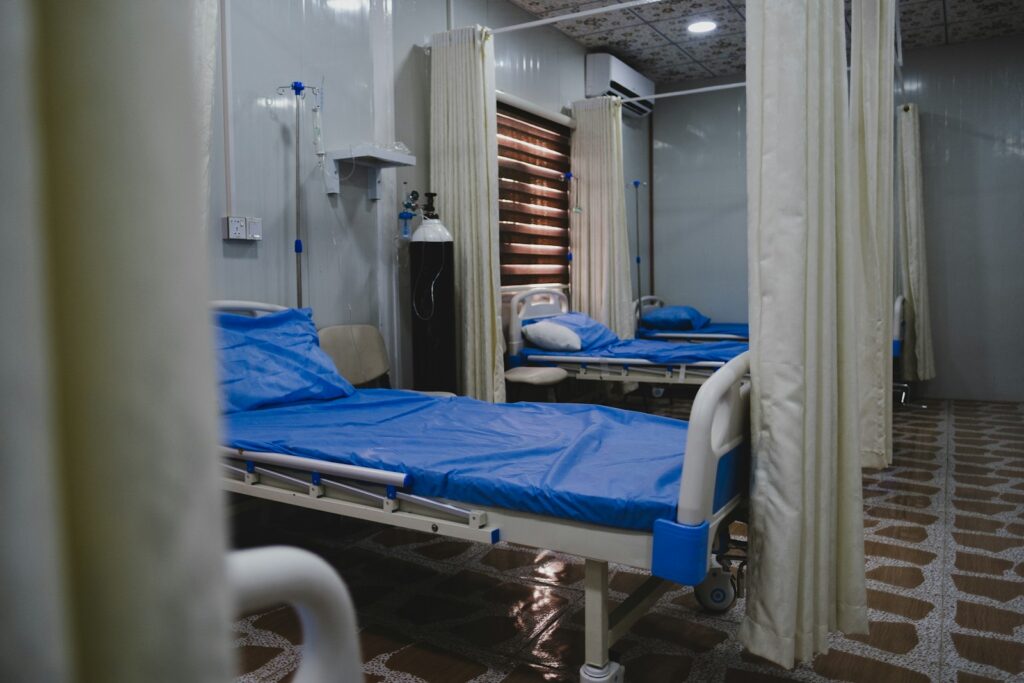





Nearly a quarter of over-65s staying in hospital longer than necessary are reported to have dementia, according to new research.
Research from Alzheimer’s Society, the first of its kind, shows 24% of over-65s kept in hospital for at least three extra weeks, after being declared fit enough to leave, are believed to have dementia.
The figure, which was uncovered after the charity analysed data from NHS England, equates to almost 29,000 people a year.
Some areas were discovered to be worse than others. In Suffolk and North East Essex, one in five over-65s kept in hospital for 21 days longer than necessary (or more), had dementia. However, in North Central London the figure rises to a stark 44%.
While the report doesn’t explain the reasons for delays, it’s understood that causes are related to poor planning and a lack of appropriate support.
These delays are adding to mounting NHS pressures – recently the Royal College of Nursing said corridor care has become a ‘permanent fixture in NHS hospitals’. In similar vein, separate figures show bed occupancy rates have reached 94.6% and more than 14,000 patients a day are fit for discharge, but can’t leave.
What’s more, members of Alzheimer’s Society have warned hospital stays can be distressing for people with dementia and harm their physical health – causing risks such as infections, falls, poor mental health and malnutrition.
Michelle Dyson CB, chief executive officer of Alzheimer’s Society, said: ‘Every year, the NHS faces extreme winter pressures and we see time and time again the struggle to cope with the numbers of people needing urgent care.
‘People living with dementia are being left stranded in hospital, which is neither good for them nor the NHS.’
For instance, Martin Farran, 64, a semi-retired director of social care services, described his mother Sarah’s experience.
Sarah was diagnosed with Alzheimer’s in 2018 and has repeatedly been admitted to hospital – every single time she was kept in longer than necessary, despite having a care package in place. In 2023, she even spent a month on a surgical ward without needing surgery.
‘I know from my professional career how big a challenge dementia is for health and social care but it wasn’t until mum became unwell that I understood the gravity of what it is to live with,’ Martin said. ‘I am generally very positive about the NHS – and the staff who have looked after mum at various times have been very kind – but the system just isn’t set up to deal with dementia.
“When she was in sheltered accommodation, nearly every fall or UTI resulted in a hospital visit, which was completely unnecessary. Those hospital stays really affected mum. The staff don’t usually have the time or the training to talk to patients, get to know them and help them understand what’s happening.
‘As a result, she was confused and very isolated, which wasn’t good for her mental health. Her physical health has taken a hit too – if you don’t support someone with dementia to stay active, their mobility can decline very quickly. ’
Adam Gordon, professor of the care of older people at Queen Mary University of London, said the research paints ‘a stark picture of delayed discharge from hospital for people living with dementia.
‘That’s why we need to address the root causes of avoidable hospital admissions, by improving early and accurate diagnosis, and the quality of care and support people living with dementia receive.’
Image: Mario Heller/UnSplash
In related news:
More than 100,000 autistic children in England’s state schools – research
Leave a Reply