


















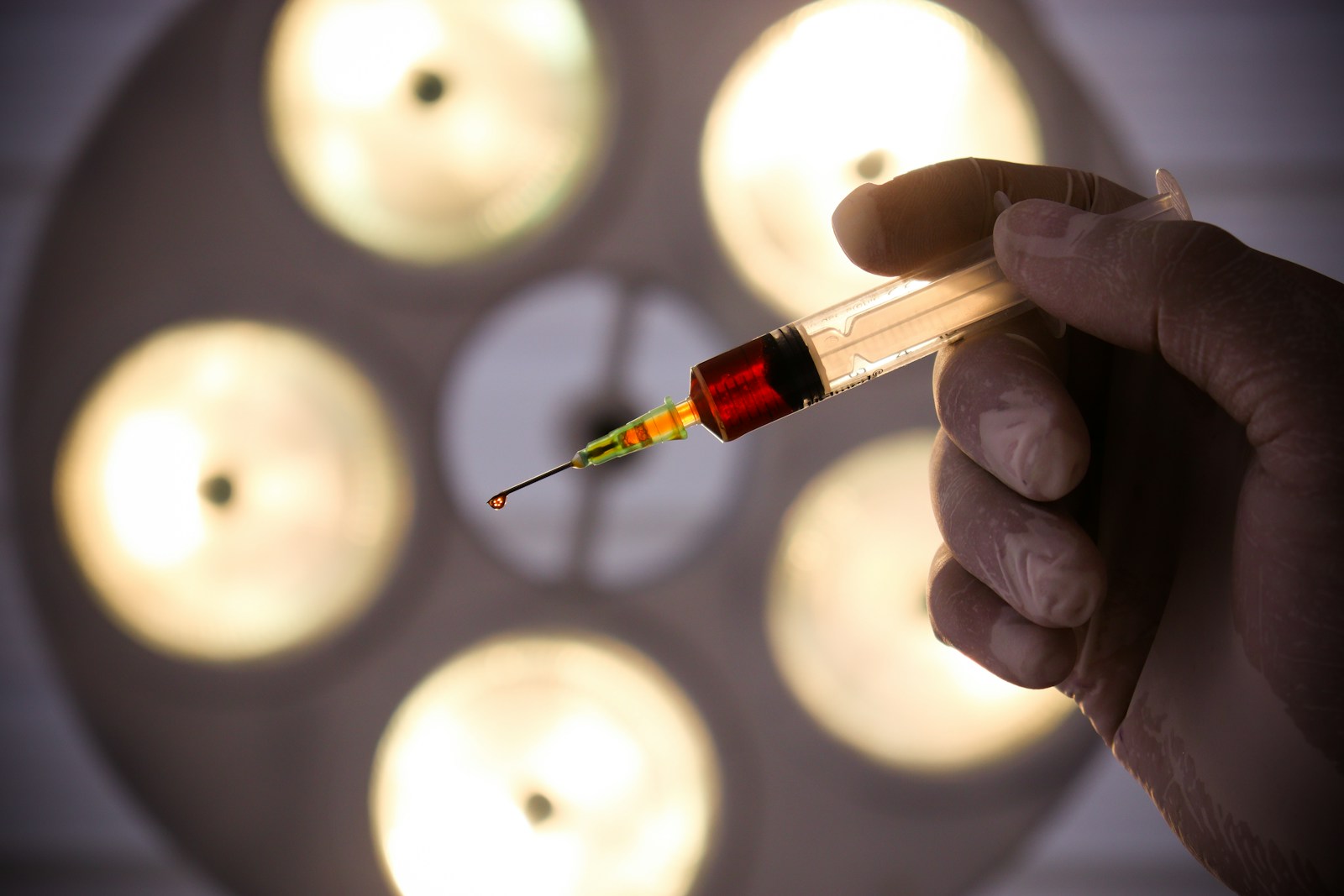
Researchers believe the treatment could transform the lives of more than eight million people who live with the condition.
Parkinson’s is a condition that targets the brain. The disease damages nerve cells, which, overtime, cause people to suffer with tremors, slow movement and stiff, inflexible muscles. Currently there is no cure for the illness, but treatments have been created to help reduce symptoms and improve people’s quality of life.
In light of this, researchers from the University of South Australia (UniSA) have developed a new injection which delivers a steady dose of levodopa and carbidopa – two key medications for Parkinson’s – over the course of a week.
There are a number of benefits to the new injection, particularly its ability to replace the need for daily tablets. Experts outlined that swallowing tablets can be quite dangerous for people with Parkinson’s, as the disease can affect their ability to swallow.
‘Our goal was to create a formulation that simplifies treatment, improves patient compliance and maintains consistent therapeutic levels of medication. This weekly injection could be a game-changer for Parkinson’s care,’ Professor Sanjay Garg, lead researcher of the study, said. ‘Levodopa is the gold-standard therapy for Parkinson’s, but its short life span means it must be taken several times a day.’
In similar vein, Deepa Nakmode, UniSA PhD student, added: ‘After years of focused research, it’s incredibly rewarding to see our innovation in long acting injectables for Parkinson’s disease reach this stage. Our invention has now been filed for an Australian patent.’
While the research surrounding the new injection is still early days, UniSA experts are optimistic about its potential. They have said they hope to start clinical trials in the near future and are exploring commercialisation opportunities.
What’s more, Professor Garg says if this treatment plan can successfully deliver week-long doses of medications, the technology could be adapted for other chronic conditions such as diabetes and cancer.
More details about the injection, which have been published in a study titled ‘Development of an in-situ forming implant system for levodopa and carbidopa for the treatment of Parkinson’s disease’, can be found in full here.
Photo by Emin bay via UnSplash
In related news:
Leave a Reply