
















Today the UK Covid-19 Inquiry published a report which details the profound effects the pandemic had on the adult social care sector. To say its contents are devastating would be an understatement.
For some, 2020 is a period that can be remembered well. Phrases such as: ‘remember that time we were furloughed from work’ or ‘remember when the weather was really good during lockdown, and we could just sit in the garden all day’ have since filled conversations between friends and family whose lives have now returned to normal. However, this is not the case for everyone. Especially those who worked in adult social care.
Today (Monday 30th June) the UK Covid-19 Inquiry have published their latest ‘Every Story Matters’ report which details the experiences of care workers and patients during the pandemic. The document is comprised of over 47,000 personal stories – the largest public engagement exercise ever undertaken by a UK public inquiry.
‘The stories in this Every Story Matters record highlight some of the most challenging circumstances for carers, care home residents and their families during the pandemic,’ Ben Connah, secretary to the UK Covid-19 Inquiry, said. ‘By documenting these deeply personal experiences, we ensure that the voices of those who suffered, cared and grieved during the pandemic will help inform the inquiry’s recommendations to ensure the care sector is better prepared in the future.’
News of the record being published today coincides with the start of public hearings for the Covid Inquiry’s latest investigation – the care sector. The hearings are due to take place over the next five weeks in London and will examine how well (or not) social care was treated throughout the pandemic.
On the subject of investigations, experts conducted 336 interviews and hosted 38 events across the four nations, to gather research for the latest report. From this, thousands of different struggles were recorded, each one no more devastating than the last.
For example, one care home worker, whose identity will remain anonymous, said the hardest things about the pandemic were the additional work pressures and family members not being given a proper chance to say goodbye to their loved ones before they passed.
‘We had a gentlemen who was end of life who didn’t end up in hospital because we nursed him ourselves, which, again, we’re not a nursing home. So, really, we shouldn’t be doing that,’ they said. ‘We literally had to call the family in at the last minute, so that they could say goodbye and then they had to leave, it was awful, it was absolutely awful. I don’t think I would’ve put up with it if it was my family.’
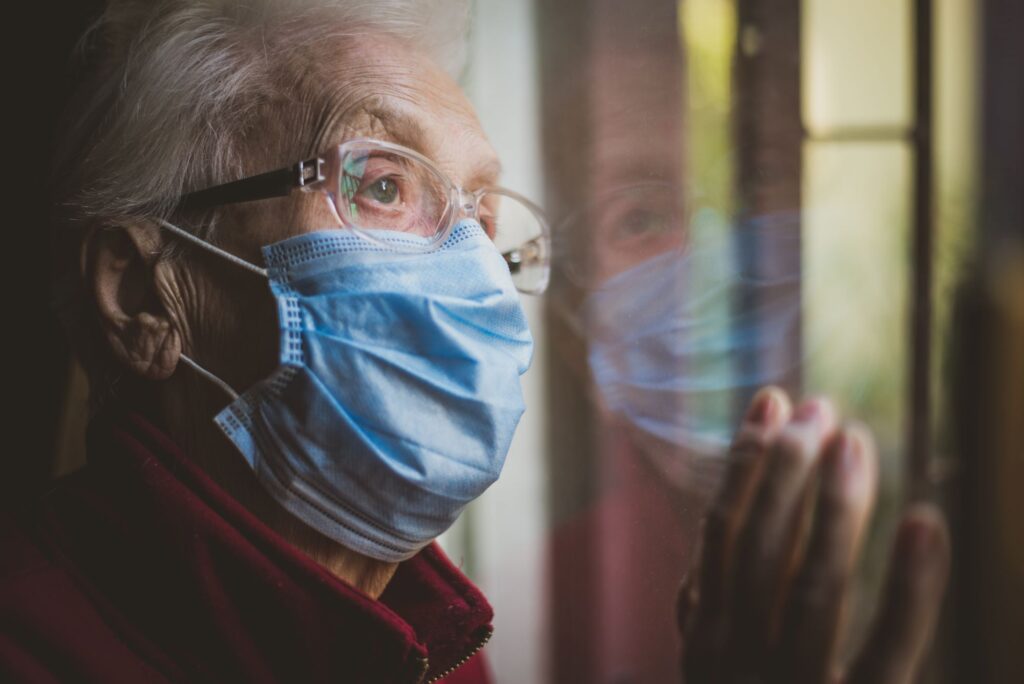
Meanwhile, an individual with care and support needs in England, cited loneliness as the silent killer of the pandemic. They said: ‘I am disabled, and I have a terminal autoimmune disease, so I was shielding. During the pandemic, I felt lost, isolated, lonely and forgotten and scared…Although my sister and her family live next door, we did not meet but had a daily phone call for 10 minutes as she looks after her disabled daughter, so was very busy.’
Though these experiences can be described as nothing short of horrific, the introduction of the ‘Do Not Attempt Cardiopulmonary Resuscitation (DNACPR) notices’ were arguably the most sickening thing to come from the pandemic. The rule was announced when England went into its second lockdown, towards the end of 2020, and was issued to people with learning disabilities.
In the report, a Welsh individual with care and support needs, said: ‘I have a disability [and] I am still shaken to the very core of my being, that they imposed DNACPR notices on those of us with a significant disability or over a certain age.’
Echoing a similar tone, a registered manager of a care home in England said when they heard the news, they ‘refused’ to implement such a rule. They explained: ‘My residents will make that decision for themselves. You’re not going to enforce that, so don’t be sending anybody here because you’re not doing that. I asked the question. I asked everybody the question because who knew what was going to happen, but I wouldn’t let anybody come in and do that.’
While the past cannot be erased, measures can be put in place to ensure nothing as catastrophic as the pandemic affects the care sector in such a way again.
‘I would like to thank every one of the tens of thousands of people who shared their stories,’ Ben added. ‘They not only contributed to this latest comprehensive record but also engaged with Every Story Matters to help the Inquiry learn lessons for the future.’
The report can be accessed in full here.
Photo via Shutterstock
In related news:
Leave a Reply