












Sky Kids has announced a third series of BooSnoo!, an engaging children’s show in which we follow a red ball rolling through a series of different tactile worlds.
As creator and executive producer Julian Bashford tells Social Care Today, the aim of the show is to provide children of all ages, especially neurodivergent children, with moments of joy…
Hello Julian. For those who don’t know, what is BooSnoo! and how did it come about?
It’s a show on the television channel Sky Kids in the UK and Ireland, and available as part of NOW TV. We launched in 2023 and have now made 40 episodes. At the start of each episode, a child picks up a red ball and posts it through a hole into a machine. We then follow the ball’s journey until it gets back to where it started. It’s very simple but also very satisfying to watch and experience.
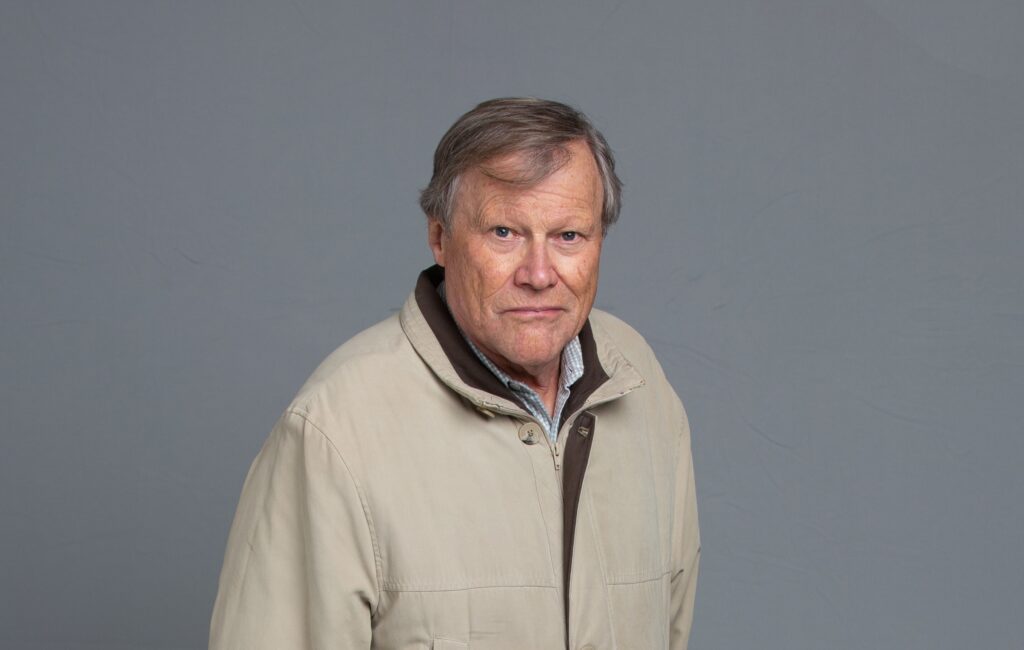
Julian Bashford on the set of BooSnoo!, photo courtesy of Visionality Media LtdInitially, we designed it for three year-olds. It was inspired by the things we found helpful when my eldest son — who is autistic — was young. A child who is neurodivergent can have a range of different needs but often what really helps is a little time out when their ‘social battery’ is running low and they need to recharge.
With our son, we found that what worked best was TV programmes with no story but interesting visuals. This was in the early 2000s, before we could look things up on YouTube. We had a DVD from the US which showed this toy of penguins climbing up some stairs and going down a slide, then coming round again. It was hypnotic to watch. We soon found that he loved anything of that sort, such as what are called ‘Rube Goldberg’ machines, where there’s a cause and effect. They held his interest but weren’t overly thrilling or stimulating, so gave him a moment of focus. I now know that children — particularly neurodiverse children — are interested in things with spinning components. But when we started BooSnoo! I was really just thinking about my son’s fascination with those kinds of mechanism.
BooSnoo! is more than just a series of different, complicated machines doing simple tasks.
Yes, each episode is very structured. The main episodes are seven minutes long and have the same structure, so the child watching knows what to expect. Individual scenes are no longer than a minute, so if a child doesn’t like or engage with one bit of an episode they know it will soon move on. Just the structure of it is comforting.
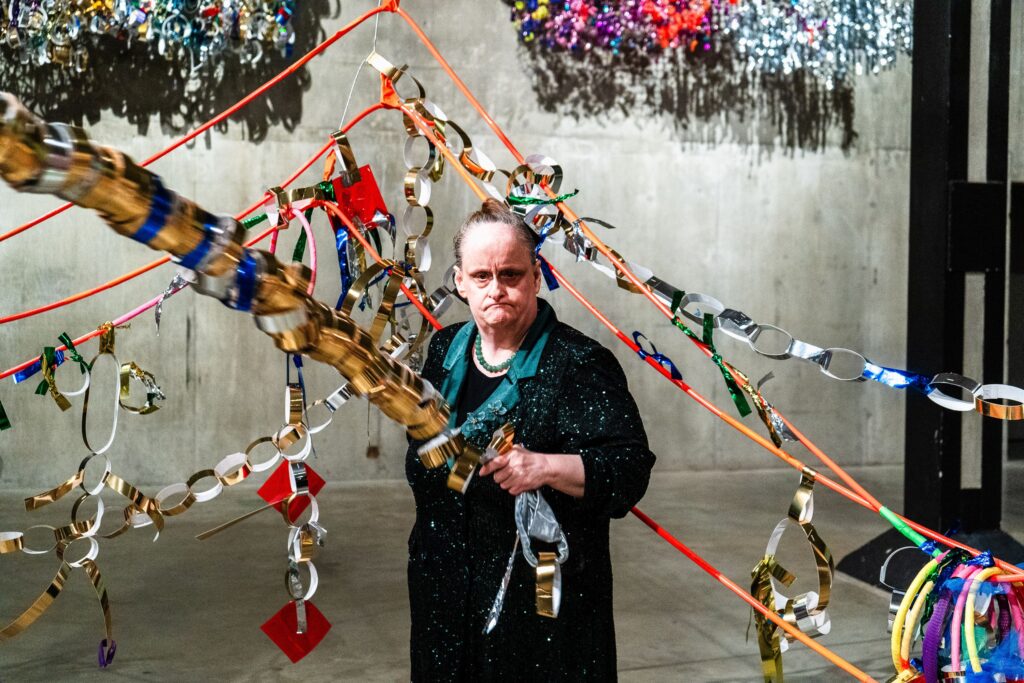
Then we think about the kinds of things that really work for neurodiverse children. There has been a lot of interest in this area in the past five or 10 years. Sensory play has become a big thing: colour, patterns, lights, the feel of things spinning, all that kind of stuff. We use that to inspire what we call ‘moments of joy’ that appeal to the senses.
As well as the visuals, we think a lot about the sounds: the right splotch as the red ball splashes through water, the right squish as it flows through viscous liquid. It might run softly through fur or thrum over cardboard. We have some gentle, naturalistic music, too — without songs. But we find that when we drop the music and just have the sounds, children watching often lean in towards the screen, responding to that tingly, ASMR sensation. Then we bring back the music and it’s like there’s a release of tension. It’s a nice feeling. So it’s all about bringing together visuals, sound and feeling to make an orchestrated, predictable seven-minute time-out, while still having moments of joy and surprise.
The red ball is the focus of each episode.
Photo courtesy of Visionality Media LtdYes. The original idea was that a child takes a red ball from a cloud, installs it with a thought — ‘I would like to see things about zebras’ or ‘I would like to see things about umbrellas’ — and puts it into a machine, which then rolls the ball through it. The ball doesn’t have any agency. It just follows the laws of physics, entering each scene on the left-hand side of the screen, rolling along through whatever it meets, and then exiting on the right. It might pass through a pinball game or something clockwork or down a water pipe, but the red ball is always on screen. That means you can switch on an episode at any point and know what you’re watching.
Each episode has ‘marble-run’ moments, where the ball rolls through tubes and corkscrews. And then there are uniquely created moments of joy for each episode: it might be flying over mountains in a hot air balloon or splashing about in a water park. Anything can happen. But at the end, it’s back into the pipes and it passes three ‘memories’ of the things it’s just been through. That repetitive structure is important for young children. Then the ball pops out of the machine, lands on its cloud and returns to the sky.
Is the red ball a character? Is that how you see it?
It’s funny: the red ball doesn’t have the ability to do anything but it gets a lot of love from people. Even people working on the show get protective of Boo, as we call it. We realised early on that we didn’t want it to ever be in danger, or get bashed or hurt by its journey. It’s having a lovely, gentle run and enjoying the experience.
The series has a particularly tactile quality. How do you make it?
It’s a combination of computer-generated and live action. We think it’s important to have a mixture of the two because CG can build big and fascinating worlds but live action gives us those sensory elements. We try to make the two methods seamless. I hope you don’t see which is which: it’s just BooSnoo! and it doesn’t matter to the viewer how we make it.
In fact, it’s made in co-production with a studio called McKinnon & Saunders, a company based in Manchester which also makes puppets and models for everything from movies by Tim Burton and Wes Anderson to the TV series Postman Pat. Our computer graphics are delivered by Studio Liddell.
Do you have experts in child development and neurodiversity advising you on all this?
We don’t have scientific advisors as such. I’ve been in communication with the National Autistic Society. At an early stage, I showed them what we were doing and their response was pretty much, ‘Great, keep going.’ There have also been informal chats with people to see what they thought.
Instead, a lot of what we do is led by children themselves. Many neurodiverse children struggle to communicate their sensory needs. But I’m involved with a lot of neurodiverse families and I see what children respond to, the kinds of toys they play with, their patterns of play and the things they do to decorate their rooms, which all naturally informs our thinking.
You said when we started that BooSnoo! was initially designed for three year-olds. Is that no longer the case?
It’s more that we’ve found that it works for any age. The models and designs we use aren’t babyish; I’d say they’re sort of ageless. Often, families watch together — an eight year-old might watch BooSnoo! with a two year-old sibling, or it’s what you snuggle up to watch with a grandparent. For some people, it’s part of the ritual of getting ready for bedtime. Others keep an episode ready on a phone or tablet to use when a child shows signs of stress. We get a lot of feedback from our viewers. Whenever a new broadcaster takes the show, I soon have lots of people getting in touch. It’s got a very committed following.
What have you learned from making BooSnoo!?
That’s a big question! I’ve never made a TV show before so it’s been a massive learning curve. A lot of the team working on it has experience of scripted shows and have learned new ways or working and telling stories. We can still make viewers laugh or jump, but we do that without words.
It’s reaffirmed my sense that not everything has to be noisy. A lot of stuff marketed at kids — in books and films as well as TV — can be quite noisy and urgent, filled with words and story and things going on. It works hard to grab your attention and then keep it. That’s why I think it was brave of Sky Kids to back a show like BooSnoo! that has no story, no faces, no star, no big-name celebrity, no songs you can sing along to. It stands out because it’s so different.
Then there’s what happens when you take away the words and songs, and go for that ASMR sound environment. It’s not something we set out to do and we never present the show as a kind of intervention, but I’ve heard from a lot of parents and carers about the effect it can have.
In what way?
It seems that we’ve created a safe space that children move into and make their own. I’ve been sent some incredible videos: children who are usually non-vocal or find it hard to talk, but who babble away in front of BooSnoo!, explaining what they see on screen. That can have the most amazing, positive impact on families. I’ve learned a lot about autism and ADHD from people sharing their different experiences. In fact, in working on this show I’ve learned a lot about me.
At what point in the process did you learn you are autistic?
The more I learned about autism the more I could see things reflected in my own life. But also creating a show and getting it into production involves a lot of introspection. In considering the audience and trying to guess what they’ll engage with, you’re really exploring the kinds of thing you respond to yourself. It helped me better understand me: that I have particular ways of working, and particular passions and interests. I can also see why I had to drop out of higher education when I did. I’ve now had a formal diagnosis.
Photo courtesy of Visionality Media LtdWhat kind of impact has that had on your life and work?
It hasn’t changed my relationships, work or anything like that because I’m still me. It’s been more enlightening than life-changing, helping me to make sense of things and put bits of my past to rest. It also means BooSnoo! has a kind of official badge as a show for neurodivergent children which has been created by an autistic person. And I’m now a bit of a voice for neurodivergent audiences in the TV world. I get asked my opinion. I also now recognise that I have experience I can share.
So what next?
We have this new series of BooSnoo to make. And I’m working on other TV projects, including something aimed at deaf and hearing-impaired children. We’ll see where that goes…
Thank you very much, Julian Bashford.
In related news:
Prioritising your mental health unlocks new realms of success
Know Yourself, Grow Yourself: Children’s Mental Health Week begins
AI is allowing social workers to escape from behind the desk
Leave a Reply